Mold Remediation in Greenbush, ME
Mold can start growing on wet building materials within 24 to 48 hours after water damage. Water Damage Greenbush, ME provides professional mold remediation following IICRC S520 protocols, including assessment, containment, removal, antimicrobial treatment, and post-remediation clearance testing. We serve Greenbush and all of Penobscot County. Call (207) 857-7378.
Think you have mold? Call (207) 857-7378. We can assess your situation and give you an honest answer about what needs to be done.
Why Mold Is Common in Greenbush Homes
Greenbush’s climate creates ideal conditions for mold growth.
Winters bring 74 inches of snow and frequent freeze-thaw cycles that cause condensation on cold surfaces inside homes. Spring thaw floods basements and crawl spaces. Summers bring humidity that keeps moisture levels elevated in poorly ventilated areas.
Most homes in this part of Penobscot County were built before 1980. Many have crawl spaces with no vapor barriers, basements with minimal ventilation, and attics where insulation has settled over the decades, creating cold spots where condensation forms.
The most common mold situations we see around here:
- After water damage that was not professionally dried. This is the number one cause. A burst pipe, a slow leak, or basement flooding that was cleaned up with towels and fans but never properly dried leads to mold growth behind walls, under floors, or in crawl spaces weeks or months later.
- Crawl spaces with standing moisture. Exposed dirt floors, no vapor barrier, and limited ventilation create a year-round mold environment under your home.
- Basement moisture. Older foundations that seep during spring thaw, combined with poor ventilation and stored belongings against walls, create the humidity mold needs.
- Ice dam leaks. Water from roof ice dams enters attic spaces and soaks ceiling insulation. If it is not dried properly, mold colonizes the attic sheathing and can spread.
- Bathroom and kitchen areas. Inadequate ventilation in bathrooms and under-sink leaks that go unnoticed create chronic moisture conditions where mold thrives.
Signs You Might Have Mold
Mold is not always visible. Watch for these indicators:
Musty odor.
A persistent damp, earthy smell, especially in basements, crawl spaces, or closed rooms, is the most common first sign.
Visible growth.
Black, green, gray, or white patches on walls, ceilings, baseboards, or stored items. Mold can look like staining, discoloration, or a fuzzy texture.
Water stains.
Any stain on a ceiling, wall, or floor that came from a past leak is worth investigating. The visible stain is the surface. What is behind it may include mold growth.
Peeling or bubbling paint.
Moisture behind walls pushes paint away from the surface. If paint is peeling in an area that has not been recently painted, moisture and potentially mold may be behind it.
Warped or soft drywall.
Drywall that feels soft, bows outward, or crumbles when pressed has moisture damage and likely has mold on the back side.
Respiratory symptoms.
Unexplained coughing, sneezing, congestion, or irritated eyes that improve when you leave the house and return when you come back may indicate airborne mold spores.
If you recognize any of these, call (207) 857-7378. We can assess whether you have mold and how extensive it is before recommending any work.
Our Mold Remediation Process
We follow IICRC S520 mold remediation standards on every job. Here is what that means in practice:
Assessment
We inspect the affected area and use moisture meters to identify the source and extent of the moisture problem that caused the mold. Mold is a symptom. The moisture source is the disease. If we do not identify and fix the moisture source, mold will come back after remediation.
We assess the extent of visible mold and use thermal imaging to check for hidden moisture and potential mold behind walls and under floors.
Antimicrobial Treatment
After physical removal, all surfaces in the remediation area are treated with EPA-registered antimicrobial agents. This kills remaining mold spores on surfaces and helps prevent regrowth.
Containment
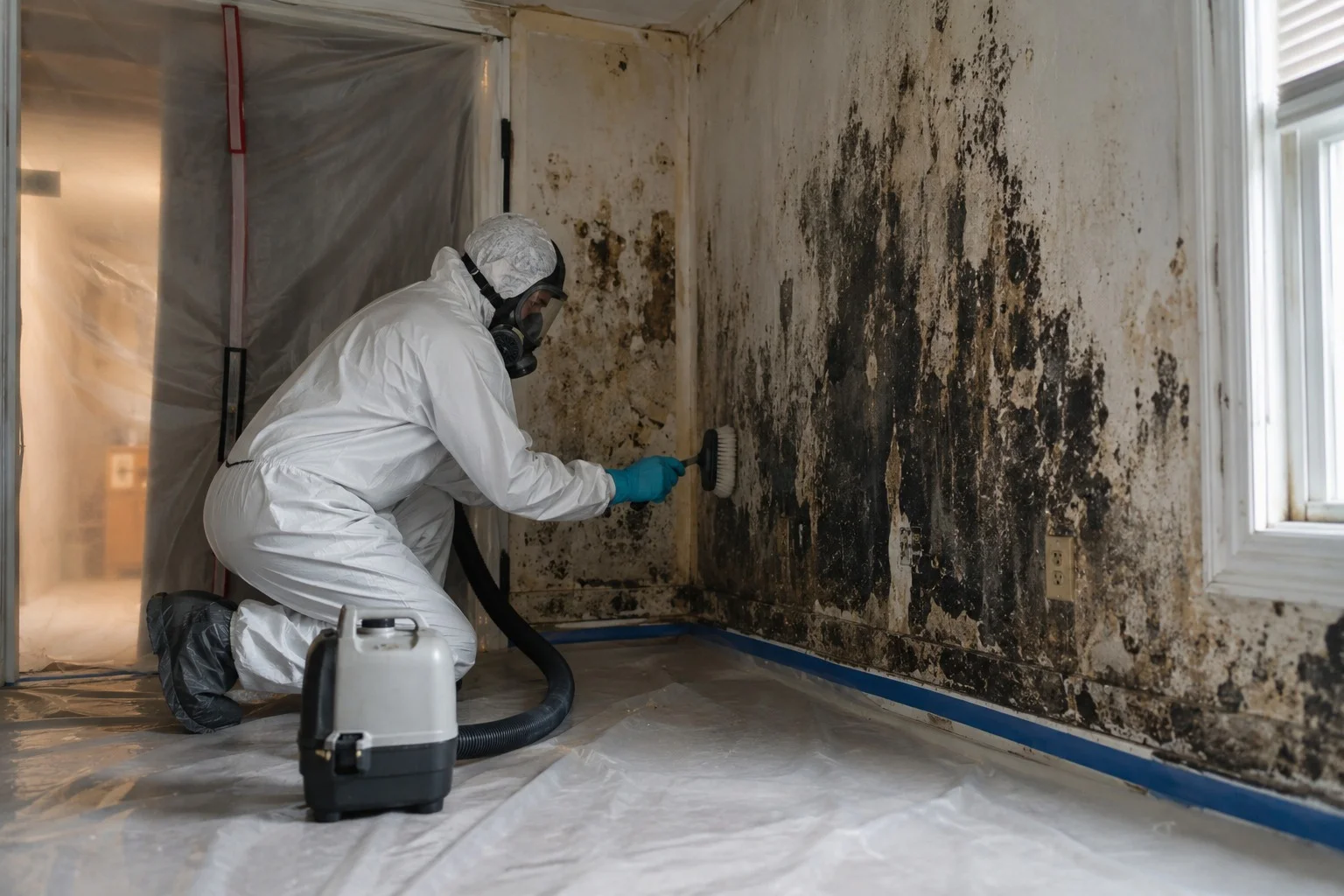
Before any mold is disturbed, we set up containment barriers using 6-mil polyethylene sheeting to seal off the affected area from the rest of your home.
We place HEPA air scrubbers with three-stage filtration (filtering down to 0.03 microns) inside the containment zone. Mold spores measure around 0.05 microns, so HEPA filtration captures them effectively.
We create negative air pressure inside the containment zone. This means air flows into the zone but not out of it, preventing mold spores from spreading to unaffected areas of your home during removal.
HEPA Cleaning
The entire remediation area gets a thorough HEPA vacuuming of all surfaces, including walls, ceilings, floors, and any remaining fixtures. This captures residual spores that may have settled during the removal process.
Removal
All mold-affected materials that cannot be properly cleaned are physically removed. This typically includes:
· Mold-colonized drywall and drywall paper
· Contaminated insulation
· Severely affected carpet and padding
· Porous materials where mold has penetrated beyond the surface
Non-porous and semi-porous materials (wood framing, concrete, metal) that have surface mold are cleaned using HEPA-vacuuming and antimicrobial treatment rather than replaced.
All removed materials are bagged inside the containment zone and disposed of properly.
Post-Remediation Clearance
After remediation is complete, we conduct a final inspection. Air quality testing or surface sampling can verify that mold levels have returned to normal background levels.
We provide a written clearance report documenting the work performed, the materials removed, and the verification results. This report is part of your permanent record and can be shared with your insurance company, real estate agent, or future buyers.
How Much Does Mold Remediation Cost?
Mold remediation costs depend on the size of the affected area, the type of materials involved, and whether the underlying moisture source needs to be addressed.
General ranges for Greenbush and Penobscot County:
These ranges cover the remediation work. If water damage restoration is also needed (extracting water, drying the structure), those are additional services documented under the same project.
When You Do Not Need Professional Mold Remediation
Small areas of surface mold on non-porous materials (tile, glass, metal, sealed concrete) that total less than about 10 square feet can often be cleaned by a homeowner using soap and water or a dilute bleach solution.
You should call a professional when:
We are happy to assess your situation by phone and tell you honestly whether it needs professional remediation or if you can handle it safely on your own.
Concerned about mold in your Greenbush home? Call (207) 857-7378 for an honest assessment.