Basement Flooding Cleanup in Greenbush, ME
asement flooding is the most common water damage event for Greenbush homeowners, especially during spring thaw and heavy rain. We provide 24/7 emergency basement water removal, structural drying, and mold prevention across Greenbush and Penobscot County. Call (207) 857-7378 for immediate help.
Flooded basement right now? Call (207) 857-7378. We answer 24/7 and can have extraction equipment running in your basement within 60 minutes.
Why Basements Flood in Greenbush
Greenbush sits on the eastern bank of the Penobscot River. Between the river, the annual 74 inches of snowfall, 43 inches of rain, and the aging housing stock in this area, basement flooding is not a rare event. It is a predictable one.
Here is what drives it:
Spring Thaw Groundwater Surge
When 6 feet of accumulated snow melts across Penobscot County, that water has to go somewhere. It saturates the ground, raises the water table, and creates hydrostatic pressure against your basement walls and floor.
Older homes in Greenbush, Olamon, and Cardville often have fieldstone or poured concrete foundations without modern waterproofing membranes. When groundwater pressure builds against these foundations, water finds every crack, seam, and joint.
Sump Pump Failure
Many basements in this area depend on sump pumps to manage groundwater. During spring thaw and heavy rain, these pumps run constantly. If the pump fails, loses power during a storm, or simply cannot keep up with the volume of incoming water, the basement floods.
Power outages during winter storms are especially dangerous. Your sump pump stops running at the exact moment water is at its worst.
Foundation Cracks and Settlement
Homes built before 1980 have had 40+ years of Maine’s freeze-thaw cycles working on their foundations. Concrete expands and contracts. Fieldstone mortar deteriorates. Cracks develop over time and grow wider each winter.
These cracks are the entry points for water. A crack that lets in a trickle during summer rain turns into a steady flow during spring thaw when hydrostatic pressure is at its peak.
Sewer Line Backups
Heavy rain and snowmelt can overwhelm aging municipal sewer lines, causing sewage to back up through basement floor drains. Tree root intrusion into older sewer laterals compounds the problem.
Sewer backup water is classified as Category 3 contaminated water. It carries bacteria, viruses, and other pathogens. It requires a completely different cleanup protocol than clean water from a burst pipe.
Ice Dam Leaks Into Lower Levels
Water from ice dam roof leaks does not always stay in the attic or ceiling. It can travel down through walls, between floors, and end up pooling in basements, especially in finished basements with drywall ceilings that trap and redirect water.
How We Handle Basement Flooding
Emergency Water Extraction
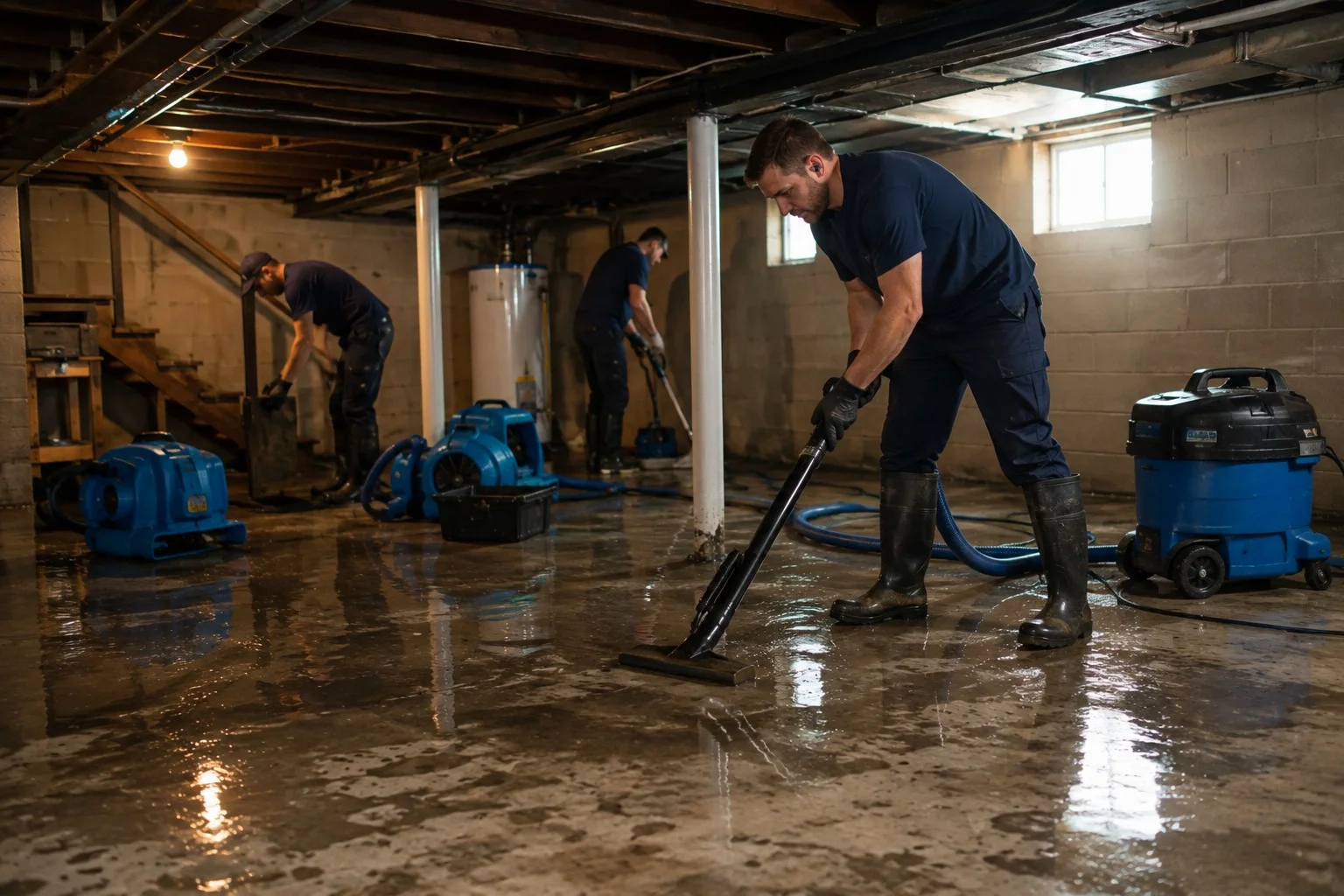
We deploy truck-mounted extraction equipment and submersible pumps to remove standing water from your basement as fast as possible. For deep water (several inches or more), we start with high-volume pumps. As the water level drops, we switch to portable extractors and floor wands for the remaining water on the slab.
Every minute of extraction matters. Water that sits on a concrete slab soaks into adjacent drywall, wood framing, stored belongings, and any carpet or flooring materials. The faster it comes out, the less secondary damage occurs.
Structural Drying
We set up commercial dehumidifiers and air movers throughout the basement. Basements are typically the hardest spaces in a home to dry because they have limited airflow, higher humidity, cooler temperatures, and concrete surfaces that absorb and retain moisture.
We run dehumidifiers that produce hot, dry air at around 90 degrees and 22% relative humidity. Air movers direct airflow across wet surfaces. For below-grade spaces, we may need desiccant dehumidification, which is more effective than standard refrigerant dehumidifiers in cooler basement environments.
Daily moisture readings track progress until every surface meets its dry standard.
Assessment and Damage Mapping
Once water is extracted, we use thermal imaging cameras and moisture meters to map exactly where water has affected the structure. In basements, water often wicks up drywall well above the visible water line. It soaks into wood studs, bottom plates, and insulation behind finished walls.
We check everything: walls, floors, any built-in shelving or cabinets, HVAC ductwork, water heater areas, and adjacent rooms. Water follows gravity, but it also follows the path of least resistance through building materials, which is not always obvious.
Antimicrobial Treatment and Mold Prevention
Basements that have flooded are high-risk environments for mold growth. The combination of moisture, organic materials (wood, drywall paper), and limited airflow creates ideal conditions.
We treat all affected surfaces with antimicrobial agents to stop mold before it starts. If mold is already present when we arrive (which is common when flooding went unnoticed for a day or more), we follow full IICRC S520 mold remediation protocols including containment, removal, and post-remediation clearance testing.
Demolition of Damaged Materials
In finished basements, flood cutting is standard. We remove drywall to a height 12 to 24 inches above the highest point water reached. Wet insulation behind the walls comes out. Saturated carpet padding is removed. Baseboards, trim, and any wood that was submerged get evaluated for salvage or replacement.
Unfinished basements typically need less demolition, but we still check for moisture in wood framing, stored items, and any finished areas like utility rooms or workshops.
Reconstruction
After drying and clearance, we replace everything that was removed. New insulation, new drywall, finish and paint, baseboards, and flooring. We handle the complete rebuild under the same project.
How Much Does Basement Flooding Cleanup Cost?
Costs depend on water depth, basement size, whether the space is finished, and the type of water.
General ranges for Greenbush and Penobscot County:
Does Insurance Cover Basement Flooding?
This is where it gets important.
Covered: Basement flooding from a burst pipe, water heater failure, or appliance leak is generally covered under standard Maine homeowners insurance as sudden and accidental water damage.
NOT covered: Flooding from groundwater, rising water tables, river overflow, or surface water entering through foundation cracks is NOT covered by standard homeowners insurance. You need a separate flood insurance policy through the National Flood Insurance Program (NFIP) for that.
Sewer backup: Most standard policies do not cover sewer backup. You need a supplemental sewer and drain backup rider, which is available as an add-on to most policies.
We document all damage for your insurance claim using Xactimate and work directly with your adjuster.
How to Prevent Basement Flooding
Prevention costs a fraction of restoration:
Test Pump
Test your sump pump before winter and before spring thaw. Pour water into the pit to make sure it activates and pumps correctly.
Battery Backup
Install a battery backup for your sump pump. When the power goes out during a storm, the backup keeps pumping.
Clean Gutters
Clean gutters and downspouts. Direct water away from your foundation, not alongside it.
Grade Yard
Grade your yard away from the foundation. Soil should slope at least 6 inches over the first 10 feet from your foundation walls.
Seal Cracks
Seal visible foundation cracks. Hydraulic cement or epoxy injection can close small cracks. For larger structural cracks, consult a foundation specialist.
Waterproofing
Consider interior or exterior waterproofing if your basement has recurring water intrusion.
Read our full spring thaw basement flooding guide for Penobscot County homeowners
Basement flooding in your home? Call (207) 857-7378. We are available 24/7.