Crawl Space Water Removal and Restoration in Greenbush, ME
Many Greenbush homes sit on crawl spaces rather than full basements. When moisture gets under your home, it creates conditions for mold growth, wood rot, pest infestations, and poor indoor air quality that affects every room above. Water Damage Greenbush, ME provides crawl space water extraction, drying, mold treatment, vapor barrier installation, and full encapsulation. Call (207) 857-7378.
Why Crawl Spaces Are Problem Areas in Greenbush
Crawl spaces in older Greenbush homes were built as a practical way to keep the house off the ground. Most have exposed dirt floors, minimal ventilation, and no moisture management system. Decades of Maine weather have made many of them the single biggest source of moisture problems in the homes above.
Standing Water
During spring thaw, groundwater rises through the soil and pools on crawl space floors. Heavy rain saturates the ground around foundations. In low-lying areas near the Penobscot River, Pushaw Stream, or Dead Stream, the water table can rise high enough to flood crawl spaces for weeks at a time.
Older foundations with cracked or deteriorated mortar allow surface water to enter laterally. Without a sump pump or drainage system, there is no way for this water to leave except through slow evaporation, which keeps humidity levels dangerously high.
Persistent Humidity
Even when there is no standing water, an unencapsulated crawl space with a dirt floor continuously releases moisture into the air through evaporation. In Greenbush’s humid summers, crawl space relative humidity can exceed 80%, which is well into the range that supports active mold growth.
This moisture rises through the floor system and into your living space. If you have noticed stuffy air, musty smells, or condensation on windows, your crawl space humidity may be the source.
Structural Damage
Persistent moisture in a crawl space attacks the structural elements of your home from below:
- Floor joists absorb moisture and begin to decay. Wood rot weakens the joists that support your floors.
- Subfloor sheathing warps and delaminates when chronically exposed to high humidity.
- Sill plates (the wood framing that sits on top of the foundation) are especially vulnerable because they are in direct contact with masonry that wicks moisture from the ground.
- Metal fasteners, brackets, and hardware corrode in high-humidity environments.
Insulation Damage
Many crawl spaces in the area have fiberglass batt insulation between the floor joists. When this insulation absorbs moisture, it sags, compresses, and eventually falls. Wet fiberglass insulation loses its thermal performance and becomes a breeding ground for mold. It also holds moisture against the wood framing, accelerating rot.
Mold Growth
A damp crawl space with organic materials (wood framing, fallen insulation, stored items, even the dirt floor itself) is an ideal environment for mold. Because crawl spaces have limited airflow, mold can grow extensively before anyone notices.
Up to 40% of the air you breathe on your first floor comes from below through the stack effect. Mold spores, musty odors, and moisture from an uncontrolled crawl space directly affect your indoor air quality.
Our Crawl Space Restoration Process
Water Extraction
If standing water is present, we extract it using submersible pumps and portable extraction equipment designed for tight, low-clearance spaces. Even crawl spaces that are only 18 to 24 inches high can be accessed and pumped.
Structural Drying
We set up drying equipment to bring the crawl space to acceptable moisture levels. Dehumidifiers and air movers are positioned to address both the air moisture and the moisture content of wood framing. Daily monitoring ensures complete drying.
Mold Assessment and Remediation
We inspect all wood surfaces for mold growth. If mold is present, we follow IICRC S520 protocols: containment, physical removal or treatment of affected materials, antimicrobial application, and HEPA filtration.
For wood framing with surface mold, we HEPA-vacuum the surfaces and apply antimicrobial treatment. Wood with deep rot is sister-joisted (new lumber attached alongside) or replaced entirely.
Vapor Barrier Installation
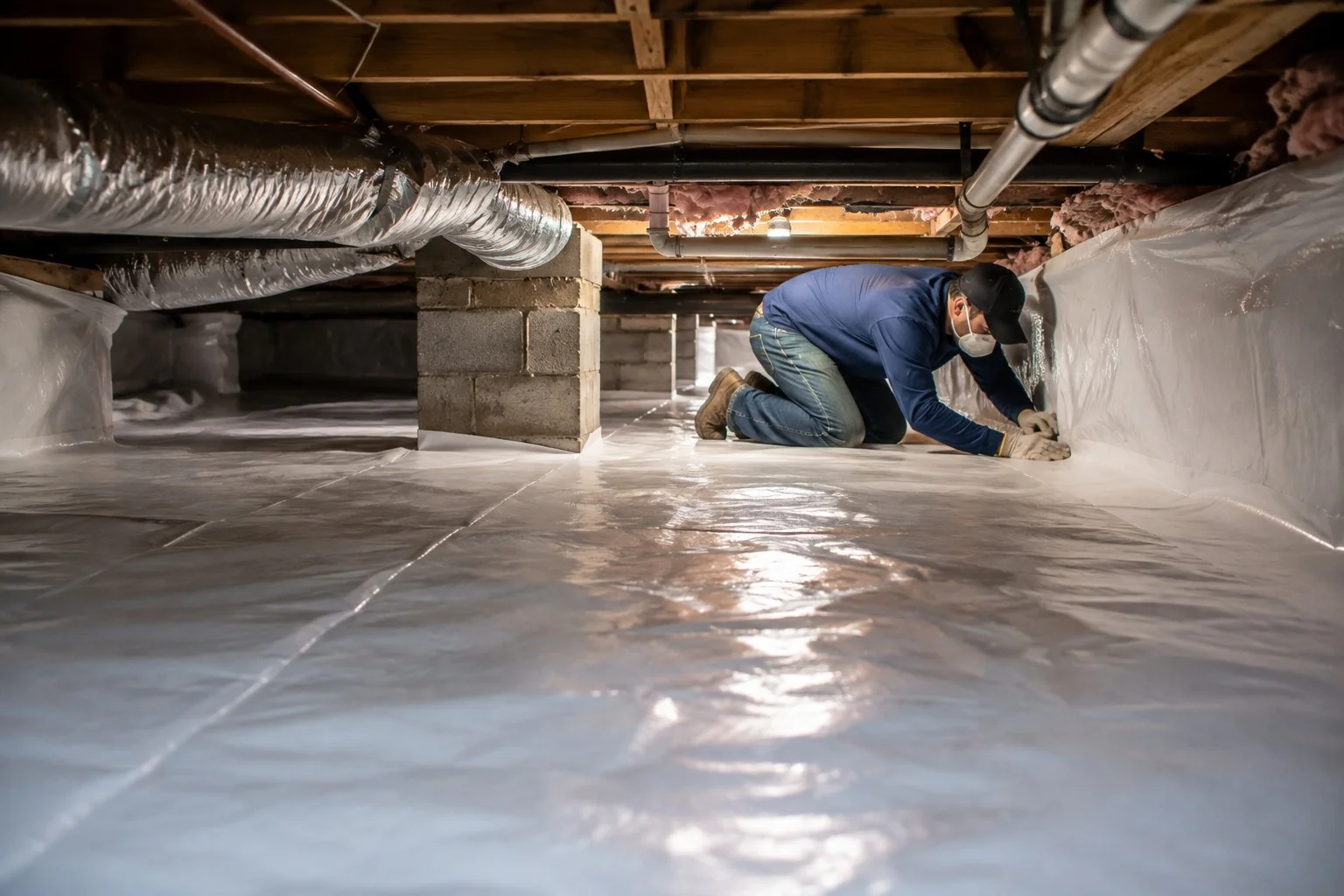
A heavy-duty polyethylene vapor barrier (minimum 6-mil, preferably 12 to 20-mil) is installed over the dirt floor and secured to the foundation walls. This barrier blocks ground moisture from evaporating into the crawl space.
The barrier is overlapped at seams by at least 12 inches and sealed with tape or adhesive. Edges are secured to foundation walls with mechanical fasteners and sealant.
Insulation Removal and Replacement
Wet, sagging, or mold-contaminated insulation is removed and disposed of. Replacement options depend on whether the crawl space will be encapsulated:
· Vented crawl space: New fiberglass batts between floor joists, secured with supports to prevent sagging.
· Encapsulated crawl space: Rigid foam insulation on the foundation walls rather than between floor joists. This is the more effective long-term approach.
Full Encapsulation (Recommended)
For long-term moisture control, we recommend full crawl space encapsulation:
· Heavy-duty vapor barrier covering the entire floor and walls
· Sealing of all vents and exterior openings
· Insulation on foundation walls (rigid foam)
· Installation of a dehumidifier sized for the space
· Optional sump pump installation if groundwater is recurring
Encapsulation turns your crawl space from a moisture source into a controlled environment. It reduces energy costs (no more conditioning air that leaks through a wet crawl space), eliminates mold risk, protects structural wood, and improves indoor air quality on the floors above.
How Much Does Crawl Space Restoration Cost?
Costs vary by size, condition, and scope of work:
These are investments that protect the structure of your home and can significantly reduce heating and cooling costs. Many homeowners find that encapsulation pays for itself within a few years through energy savings alone.
Crawl space problems under your Greenbush home? Call (207) 857-7378. We will assess the situation and give you an honest recommendation.