Flood Damage Cleanup in Greenbush, ME
Flood damage requires a different approach than a typical water leak. When floodwater enters your home, it carries bacteria, sewage, chemicals, and debris that make standard drying insufficient. Water Damage Greenbush, ME provides 24/7 emergency flood damage cleanup across Greenbush, Olamon, Cardville, and all of Penobscot County. We extract, sanitize, dry, and rebuild. Call (207) 857-7378.
Floodwater in your home? Call (207) 857-7378 right now. Do not walk through standing floodwater until you know it is safe.
What Makes Flood Damage Different from Other Water Damage
Not all water damage is the same. A burst supply line produces clean water (Category 1). A washing machine overflow that has been sitting produces gray water (Category 2). Floodwater is almost always Category 3, which is contaminated water.
Category 3 water includes:
- River overflow and storm surge from the Penobscot River
- Groundwater that rises through foundation cracks during spring thaw
- Sewer backups caused by overwhelmed municipal systems
- Standing outdoor water that enters your home through doors, windows, or foundation openings
- Any water that has contacted soil, sewage, or chemicals before entering your home
The distinction matters because contaminated floodwater cannot simply be extracted and dried. Every material it touches must be evaluated for sanitization or removal. The protocols, the protective equipment, and the post-cleanup verification are all more extensive than a clean water event.
Why Greenbush Faces Flood Risk
Greenbush sits on the eastern bank of the Penobscot River. The river runs directly along the town’s western boundary, and its tributaries, including Pushaw Stream and Dead Stream, drain through the surrounding landscape.
The Penobscot River Basin contains approximately 119 dams. Many of the lower-river dams operate as run-of-river structures with little or no capacity to hold back runoff during peak flow events. When spring thaw sends 74 inches of accumulated snow into the watershed over a period of weeks, the system runs at capacity.
Ice jams compound the risk. In March 2026, ice jam flooding on the Piscataquis River (a Penobscot tributary joining near Howland, just upstream from Greenbush) displaced residents and flooded homes. The U.S. Coast Guard deployed icebreaking tugs and a 140-foot icebreaker on the Penobscot River that same spring.
The Maine Emergency Management Agency (MEMA) has repeatedly warned that standard homeowner and business insurance policies do NOT cover flood damage from these events. River flooding and groundwater intrusion require separate flood insurance through the National Flood Insurance Program (NFIP).
Properties along the Penobscot corridor, in low-lying areas near streams, and in areas with high water tables face the greatest flood risk. But even homes on higher ground can experience flood damage during extreme events or when storm drains and culverts are overwhelmed.
How We Handle Flood Damage Cleanup
Safety Assessment
Before any work begins, we assess safety. Floodwater in contact with electrical systems creates a serious hazard. We verify that electricity to affected areas is shut off. We check for structural damage that could make the building unsafe to enter. We identify any hazardous materials (fuel tanks, chemicals, sharp debris) in the water.
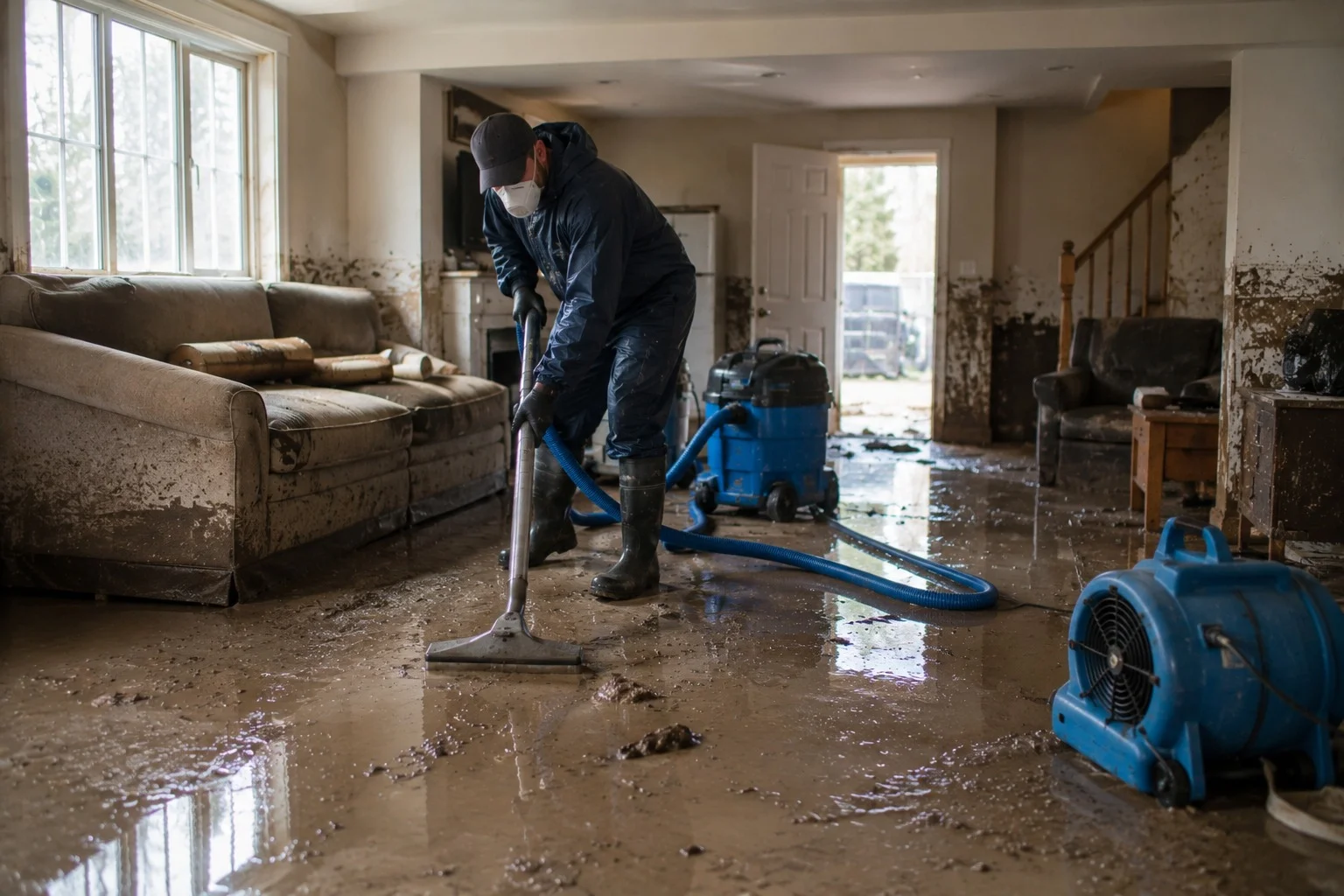
Our crews wear full personal protective equipment (PPE) when working with Category 3 floodwater, including waterproof boots, gloves, Tyvek suits, and respiratory protection.
Sanitization and Antimicrobial Treatment
Every surface that contacted floodwater gets thoroughly cleaned and treated with EPA-registered antimicrobial agents. This is not a light spray. It is a systematic treatment of every wall stud, floor joist, subfloor, and remaining structural surface.
For areas with suspected sewage contamination, we apply multiple rounds of antimicrobial treatment and verify sanitization before drying begins.
Reconstruction
Once drying is verified and clearance is documented, we begin rebuilding everything that was removed. New insulation, drywall, flooring, baseboards, cabinets, and finish work. One project, one crew, no handoff.
High-Volume Water Extraction
Flood events often involve much more water than a typical pipe break. We deploy truck-mounted extraction units with high-volume pumps for rapid water removal. For basements with significant depth, submersible pumps run continuously until the water level is manageable.
As water is removed, we use portable extractors and floor wands to clear remaining water from surfaces and pull moisture from carpets and soft materials.
Structural Drying
After extraction and sanitization, we set up commercial dehumidifiers and air movers for structural drying. Flood-damaged spaces often require more drying time than clean water events because:
· More material was affected (floors, walls, sometimes ceilings)
· Foundation walls and concrete slabs absorb significant moisture
· Crawl spaces under the home may also be flooded
· Humidity levels are often high in the post-flood environment
We take daily moisture readings and adjust equipment placement as conditions change. Drying continues until every surface meets IICRC S500 dry standards.
Contaminated Material Removal
With Category 3 floodwater, any porous material that was submerged must be evaluated carefully. In most cases, the following materials are removed and disposed of:
· Carpet and carpet padding
· Drywall below the flood line (flood cut at 12 to 24 inches above high water mark)
· All insulation that contacted floodwater
· Particleboard shelving, cabinets, or furniture
· Upholstered furniture that was submerged
· Any paper, fabric, or porous material that cannot be sanitized
Non-porous materials like concrete, metal, and sealed wood can typically be cleaned and sanitized rather than replaced.
Air Quality Management
HEPA air scrubbers run throughout the cleanup and drying process. These units filter the air down to 0.03 microns, capturing mold spores, bacteria, and particulates stirred up during demolition and cleanup.
In flood situations, we often set up negative air pressure in the work area to prevent contaminants from spreading to unaffected parts of your home.
Flood Damage vs. Water Damage: Insurance Implications
This distinction is critical for Greenbush homeowners:
Standard homeowners insurance covers:
Water damage from burst pipes, appliance failures, and roof leaks (sudden and accidental events originating inside your home)
Standard homeowners insurance does NOT cover:
Flooding from river overflow, groundwater, surface water, storm surge, or sewer backup from municipal systems
For flood events, you need a separate policy through the National Flood Insurance Program (NFIP). If your home is in a FEMA-designated flood zone, your mortgage lender may require this coverage. Even if it is not required, homeowners near the Penobscot River should seriously consider it.
Sewer backup coverage is available as a supplemental rider on most homeowners policies. It is worth adding, especially in older areas where sewer infrastructure is aging.
We document flood damage using the same Xactimate estimating format that insurance adjusters use, regardless of whether the claim goes through your homeowners policy, a flood policy, or FEMA assistance.
How Much Does Flood Damage Cleanup Cost?
Flood damage costs are typically higher than clean water damage because of the contamination factor and the more extensive material removal required.
General ranges for Greenbush and Penobscot County:
We provide a detailed written estimate before non-emergency work begins. For emergency extraction and stabilization, we begin immediately and document as we go. Flood damage in your home? Call (207) 857-7378. We answer 24/7 and handle Category 3 contaminated water events.