Sewage Cleanup and Sanitization in Greenbush, ME
Sewage backup is a health hazard that requires immediate professional response. When contaminated water enters your home through floor drains, toilets, or sewer lines, every affected surface must be extracted, sanitized, and verified safe. Water Damage Greenbush, ME provides 24/7 emergency sewage cleanup across Greenbush and Penobscot County following strict IICRC protocols for Category 3 water. Call (207) 857-7378. Sewage in your home? Do not touch the water. Call (207) 857-7378 immediately.
What Causes Sewage Backups in Greenbush
Sewage backups happen for several reasons, and older communities like Greenbush are more susceptible than newer developments.
Tree Root Intrusion
Older sewer laterals (the pipe connecting your home to the municipal sewer or your septic system) are made of clay, cast iron, or early PVC. Over decades, tree roots grow into joints and cracks in these pipes, gradually blocking the flow. When the blockage becomes severe, sewage backs up through your lowest drain, usually a basement floor drain.
Many properties in Greenbush, Olamon, and Cardville have mature trees with root systems that extend well beyond the visible canopy. Roots seek out sewer pipes because they carry moisture and nutrients.
Overwhelmed Municipal Systems
During heavy rain and spring thaw, stormwater can infiltrate aging sewer infrastructure. When the system cannot handle the combined volume, sewage backs up into homes connected to the system. This is especially common in older parts of Penobscot County where sewer lines have been in service for decades.
Septic System Failures
Properties outside the municipal sewer system rely on septic systems. A failed septic tank, a full leach field saturated by spring thaw, or a broken distribution pipe can cause sewage to back up into your home or surface in your yard.
Frozen or Blocked Lines
In a region that gets 74 inches of snow and winter lows well below zero, shallow sewer lines can freeze during extreme cold snaps. Blockages from accumulated grease, debris, or offset pipe joints also cause backups regardless of season.
Why Sewage Cleanup Requires Professionals
Sewage is not dirty water. It is Category 3 contaminated water under IICRC standards, meaning it contains:
- Pathogenic bacteria (E. coli, Salmonella, Shigella, and others)
- Viruses (Hepatitis A, Norovirus, Rotavirus)
- Parasites and protozoa
- Chemical contaminants from household and industrial waste
- Human waste and associated biological hazards
Exposure to sewage, even brief skin contact or inhalation of contaminated dust and aerosols, can cause gastrointestinal illness, skin infections, respiratory problems, and more serious health effects for vulnerable individuals (elderly, children, immunocompromised).
This is not a cleanup you handle with a mop and bleach. It requires trained personnel with proper PPE, specialized extraction and sanitization equipment, and verified decontamination protocols.
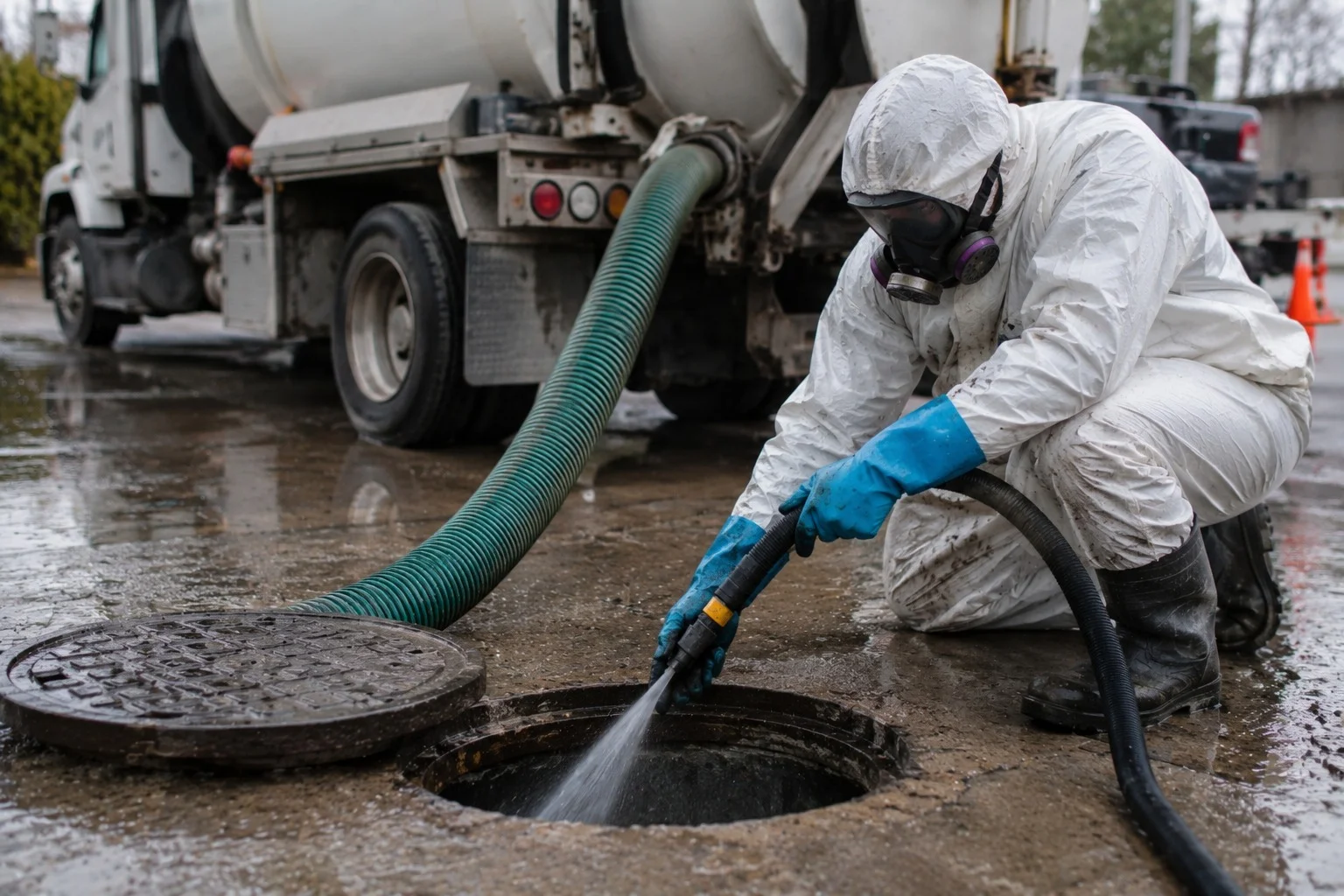
Our Sewage Cleanup Process
Safety and Containment
We arrive in full personal protective equipment: waterproof boots, chemical-resistant gloves, Tyvek suits, and respiratory protection with appropriate filtration.
Before any cleanup begins, we verify that electricity to the affected area is shut off. Standing sewage near electrical outlets, appliances, or wiring creates a dual hazard of contamination and electrocution.
We establish containment barriers between the contaminated area and the rest of your home to prevent cross-contamination during cleanup.
Sanitization
This is the most critical phase. Every remaining surface that contacted sewage (concrete floors, wood framing, metal, sealed surfaces) is:
· Cleaned with detergent to remove organic matter
· Treated with EPA-registered antimicrobial agents effective against bacteria, viruses, and fungi
· Allowed to dwell for the contact time specified by the product
· Rinsed and treated again if needed
We apply antimicrobial treatment systematically, covering every square inch of affected surface. This is not a light spray. It is thorough, documented decontamination.
Sewage Extraction
We extract all standing sewage and contaminated water using dedicated equipment. The extraction tools used for Category 3 water are decontaminated after every job to prevent cross-contamination between properties.
For basements with significant sewage volume, we use submersible pumps designed for contaminated water. As the level drops, we switch to portable extractors and floor tools.
Structural Drying
After sanitization, we set up commercial drying equipment. HEPA air scrubbers run throughout the drying process to filter airborne contaminants.
We take daily moisture readings and verify that all affected areas reach IICRC dry standards. For sewage events, we pay extra attention to concrete slabs and wood framing, which can absorb contaminants along with moisture.
Reconstruction
We replace all materials that were removed: new insulation, drywall, flooring, baseboards, and finish work. The reconstruction phase is handled under the same project.
Contaminated Material Removal
Every porous material that contacted sewage is removed and disposed of:
· All carpet and padding
· Drywall below the contamination line (flood cut 24 inches above high water mark for Category 3)
· All insulation that contacted sewage
· Cardboard, paper, fabric, and other absorbent materials
· Particleboard, MDF, or pressed wood products
For Category 3 events, the flood cut height is set higher than clean water events because contamination wicks further up porous materials.
Post-Cleanup Verification
After drying and sanitization are complete, we conduct a final inspection and can arrange for third-party testing to verify that contamination levels have returned to safe levels.
We provide a complete documentation package for your records and insurance claim.
Does Insurance Cover Sewage Backup?
This is important: standard homeowners insurance in Maine typically does NOT cover sewer backup.
You need a supplemental sewer and drain backup rider (sometimes called “sewer backup endorsement”) on your homeowners policy. This rider is available from most insurers and is relatively inexpensive, usually $40 to $75 per year for $5,000 to $25,000 in coverage.
If you do not currently have this coverage, consider adding it. Sewage cleanup costs typically range from $3,000 to $12,000 depending on the extent, and can reach much higher for finished basements.
We document all sewage cleanup work using Xactimate and work with your insurance company to process the claim.
Sewage backup in your Greenbush home? Call (207) 857-7378 immediately. Do not attempt to clean sewage yourself. We respond 24/7.