Does Homeowners Insurance Cover Water Damage in Maine?
In most cases, yes, but not all water damage is treated the same. Standard Maine homeowners insurance covers sudden and accidental water damage from burst pipes, appliance failures, and roof leaks. It does NOT cover flooding from groundwater, river overflow, or sewer backups unless you carry additional coverage. Here is a clear breakdown of what is covered, what is not, and what you need to know before filing a claim.
What IS Covered by Standard Homeowners Insurance in Maine
Standard homeowners policies (HO-3 or HO-5) in Maine typically cover water damage from these sources:
Burst and Frozen Pipes
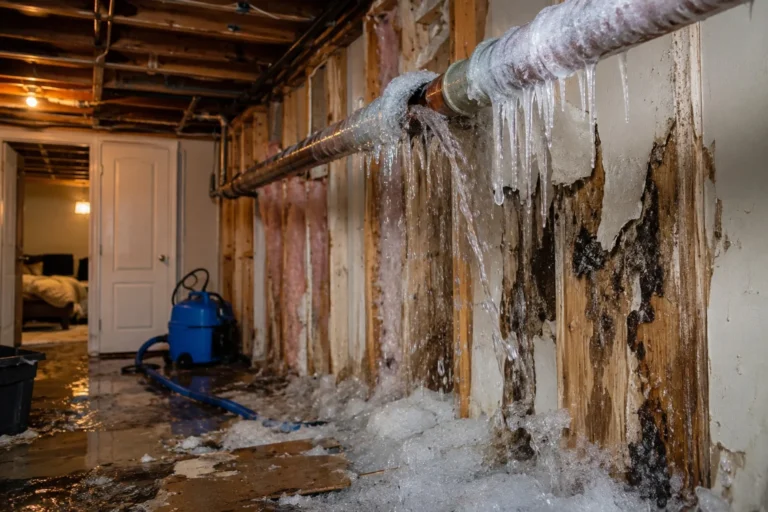
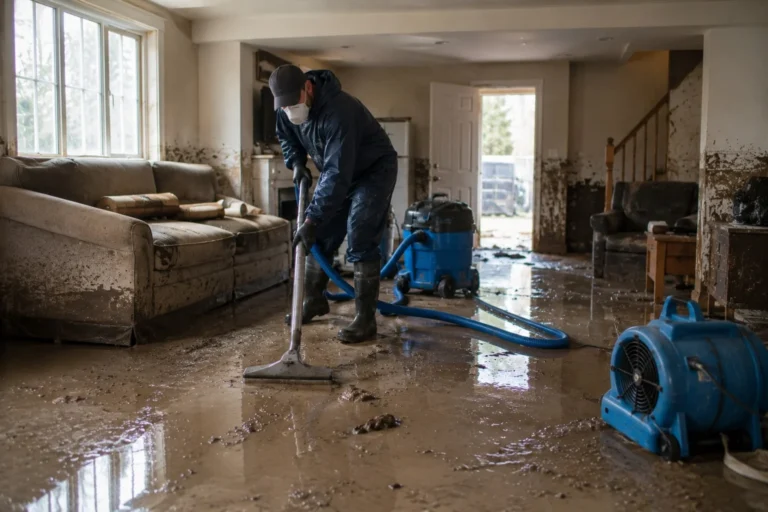
When a pipe freezes and bursts inside your home, the resulting water damage is generally covered. This includes the cost of water extraction, drying, demolition of damaged materials, mold prevention, and reconstruction. The pipe repair itself (the plumber’s work) may or may not be covered depending on your policy.
In Greenbush and Penobscot County, where winter temperatures regularly drop below zero and most homes were built before 1980, frozen pipe claims are among the most common water damage insurance events.
Appliance Failures
Water heater ruptures, washing machine hose failures, dishwasher leaks, and refrigerator water line breaks are generally covered as sudden and accidental events. The key word is “sudden.” A washing machine hose that burst without warning is covered. A fitting that you noticed was dripping for weeks before it finally failed may not be.
Accidental Overflow
A bathtub that overflowed because someone forgot to turn off the tap, a toilet that overflowed from a sudden clog. These are generally covered. Overflow from negligence (leaving a tap running and leaving the house) may be partially covered or denied depending on circumstances and your specific policy.
Roof Leaks from Covered Events
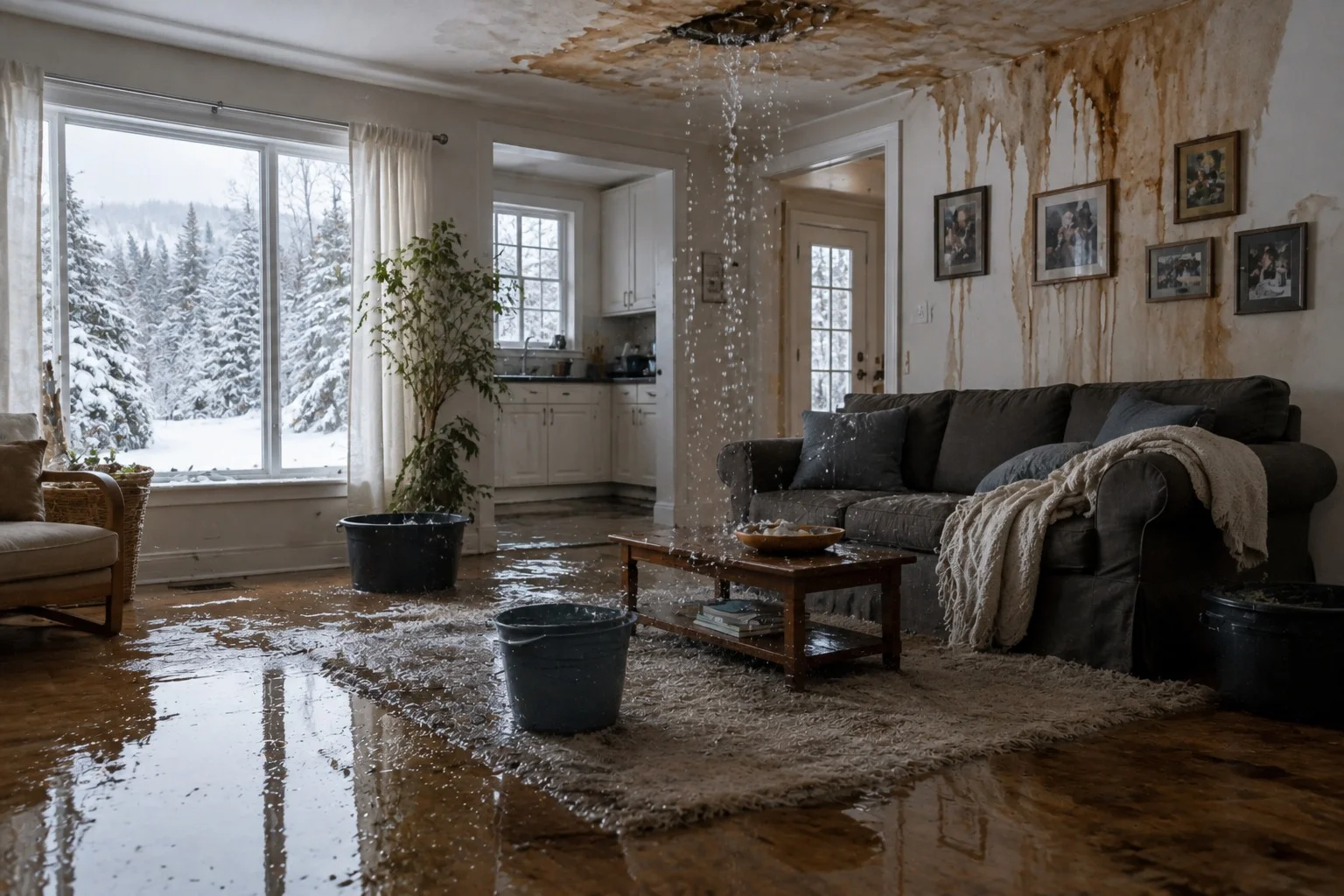
If a storm damages your roof and rain enters your home, the resulting water damage is typically covered. If an ice dam causes water to back up under your shingles and leak into your home, that water damage is usually covered.
The important distinction: the water damage is covered because it resulted from a sudden weather event. A roof that leaked because it was old and poorly maintained may not produce a covered claim.
Interior Sprinkler System Discharge
If an indoor fire suppression system activates accidentally, the water damage is generally covered.
What is NOT Covered by Standard Homeowners Insurance
This is where a lot of Greenbush homeowners get surprised. These water damage events are typically NOT covered unless you carry additional policies or riders.
Groundwater and Rising Water Table Flooding
When spring thaw sends snowmelt into the ground and water enters your basement through foundation cracks, wall seams, or the floor slab, standard homeowners insurance does not cover this. It is classified as flooding from a ground source, not a sudden and accidental event.
This is one of the most common water damage scenarios in Greenbush and one of the least understood coverage gaps.
River Flooding
Properties along the Penobscot River corridor face direct flood risk from river overflow and ice jam events. The March 2026 ice jam flooding upstream from Greenbush was a reminder of this reality. Standard homeowners insurance does not cover river flooding.
You need a separate flood insurance policy through the National Flood Insurance Program (NFIP) to cover river and surface water flooding. NFIP policies are available through most insurance agents and are required if your property is in a FEMA-designated flood zone.
NFIP policies have a 30-day waiting period before coverage begins, so you cannot purchase one after a flood is forecast. Plan ahead.
Sewer Backup
When sewage backs up through your floor drain or toilet due to a blocked sewer line or overwhelmed municipal system, standard homeowners insurance typically does not cover the damage.
You need a supplemental sewer and drain backup rider on your homeowners policy. This rider is available from most insurers and typically costs $40 to $75 per year for $5,000 to $25,000 in coverage. Given that sewage cleanup can cost $3,000 to $12,000, this rider is worth adding.
Gradual or Maintenance-Related Damage
Insurance covers sudden events, not gradual deterioration. Examples of what is typically denied:
- A slow leak under a sink that you knew about but did not repair
- Moisture damage from a chronically damp crawl space
- A roof that leaked because shingles were missing for months
- Mold that developed from ongoing humidity rather than a sudden water event
The principle: if you knew about the problem and did not address it, the resulting damage is considered maintenance, not an insurable event.
Mold (With Exceptions)
Mold coverage is complicated. If mold results directly from a covered water damage event (a burst pipe that you reported promptly, and mold developed during the restoration period), mold remediation is generally covered as part of the same claim.
If mold developed from an uncovered cause (long-term humidity, chronic crawl space moisture, a slow leak) or from a covered event that was not reported promptly, mold remediation may be denied.
Many Maine policies have mold sub-limits (a maximum payout for mold-related costs, often $5,000 to $10,000, regardless of the actual remediation cost). Check your policy for specific mold coverage limits.
How the Insurance Claims Process Works
1. Report the Loss Promptly
Contact your insurance company or agent as soon as possible after discovering water damage. Most policies require prompt notification. You do not need a detailed assessment at this point. Just report what happened, when, and what areas are affected.
2. Mitigate Further Damage
Your policy requires you to take reasonable steps to prevent further damage. This means shutting off the water source, calling a restoration company, and starting emergency extraction. Insurance companies expect this. Failing to mitigate can reduce your claim.
This is why calling us at (207) 857-7378 should be your first action. We begin emergency mitigation immediately, which is what your insurance company wants.
3. Document Everything
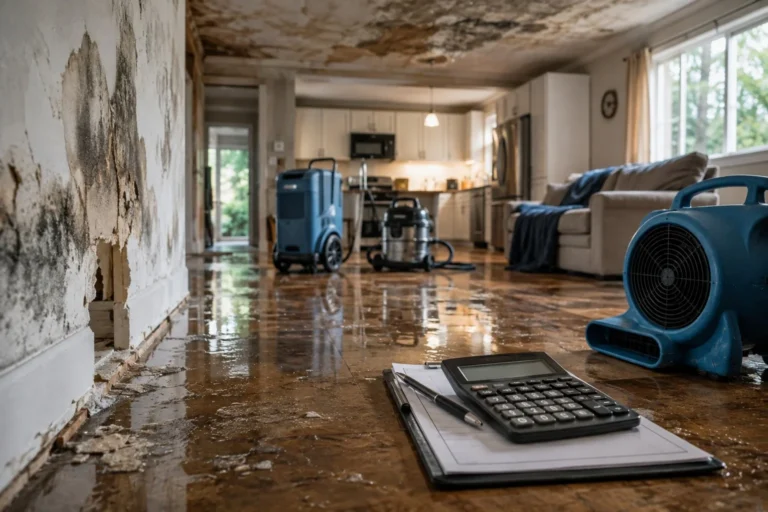
We handle the documentation for your claim. Our documentation package includes:
- Photos of all damage (before, during, and after restoration)
- Moisture readings from calibrated meters
- Thermal imaging showing moisture extent
- Daily drying logs with moisture curves
- Detailed scope of work
- Xactimate estimate (the software adjusters use)
This documentation goes directly to your insurance adjuster and supports your claim with the specific data they need to approve the work.
4. Adjuster Inspection
Your insurance company will assign an adjuster to inspect the damage. This may be an in-person visit or, increasingly, a virtual inspection using photos and video. Our documentation package is designed to support both formats.
We communicate directly with your adjuster throughout the project to answer questions, provide additional documentation if needed, and keep the process moving.
5. Payment
For covered claims, your insurance company pays the restoration cost minus your deductible. Payment may come in installments: one check after mitigation (extraction and drying) and another after reconstruction.
Your deductible is your out-of-pocket cost. Common deductibles for Maine homeowners policies range from $500 to $2,500.
Additional Living Expenses (ALE)
If the damage is severe enough that you cannot live in your home during restoration, most policies include coverage for Additional Living Expenses. This covers hotel stays, meals, and other reasonable costs of temporary relocation. There is usually a dollar limit or time limit. Check your policy for specifics.
What You Should Do Now (Before You Need to File a Claim)
- Read your policy’s water damage section. Know what is covered and what is not before you need it.
- Check for sewer backup coverage. If you do not have a sewer and drain backup rider, call your agent and add it. It costs $40 to $75 per year and covers a $3,000 to $12,000 event.
- Consider flood insurance. If you are near the Penobscot River, any tributaries, or in a low-lying area, NFIP flood insurance is worth the cost. Remember the 30-day waiting period.
- Know your deductible. Know how much you will owe out of pocket before insurance kicks in.
- Know where your main water shutoff valve is. Fast shutoff prevents further damage, which supports your claim.
- Keep our number handy. (207) 857-7378. When water damage happens, calling your restoration company first is the right move.
Frequently Asked Questions
Does insurance cover the plumber’s repair, or just the water damage?
Policies vary. Some cover the cost of accessing and repairing the broken pipe (tear-out and repair), while others cover only the resulting water damage. Check your policy or ask your agent for your specific coverage.
What if my insurance denies my claim?
You have the right to dispute a denial. Request a written explanation of the denial reason. You can hire a public adjuster to independently assess the damage and advocate on your behalf. If you believe the denial is unjust, you can file a complaint with the Maine Bureau of Insurance.
How long do I have to file a claim after water damage?
Most policies require “prompt” notification. There is no universal deadline, but reporting within 24 to 48 hours is strongly recommended. Delayed reporting can give the insurer grounds to reduce or deny the claim, arguing that the delay increased the damage.
Will filing a water damage claim raise my premiums?
It may. Insurance companies consider claims history when setting premiums. A single claim is unlikely to cause a significant increase, but multiple claims within a few years can raise rates or affect your ability to renew. Each situation is different.
Do I have to use the restoration company my insurance recommends?
No. You have the right to choose your own restoration company. Insurance companies may recommend preferred vendors, but you are not required to use them. We work with all insurance companies and are experienced in the documentation and communication adjusters expect.