
Ice Dam Damage Repair in Greenbush, ME
With 74 inches of annual snowfall, ice dams are one of the most common causes of water damage in Greenbush homes. When ice ridges form at the edge of your roof, trapped meltwater backs up under shingles and leaks into your attic, ceilings, and walls. Water Damage Greenbush, ME repairs the water damage caused by ice dams and helps prevent future occurrences. Call (207) 857-7378.
How Ice Dams Form on Greenbush Homes
Ice dams are a physics problem, not a roofing problem.
Here is what happens. Heat from your living space rises into the attic. If the attic is not properly insulated and ventilated, that heat warms the roof deck from underneath. Snow on the upper portion of the roof (above heated spaces) begins to melt. The meltwater runs downhill toward the eaves.
The eaves are the coldest part of the roof because they extend past the heated portion of the house. They are exposed to outdoor temperatures on all sides. When meltwater reaches the eaves, it refreezes into a ridge of ice.
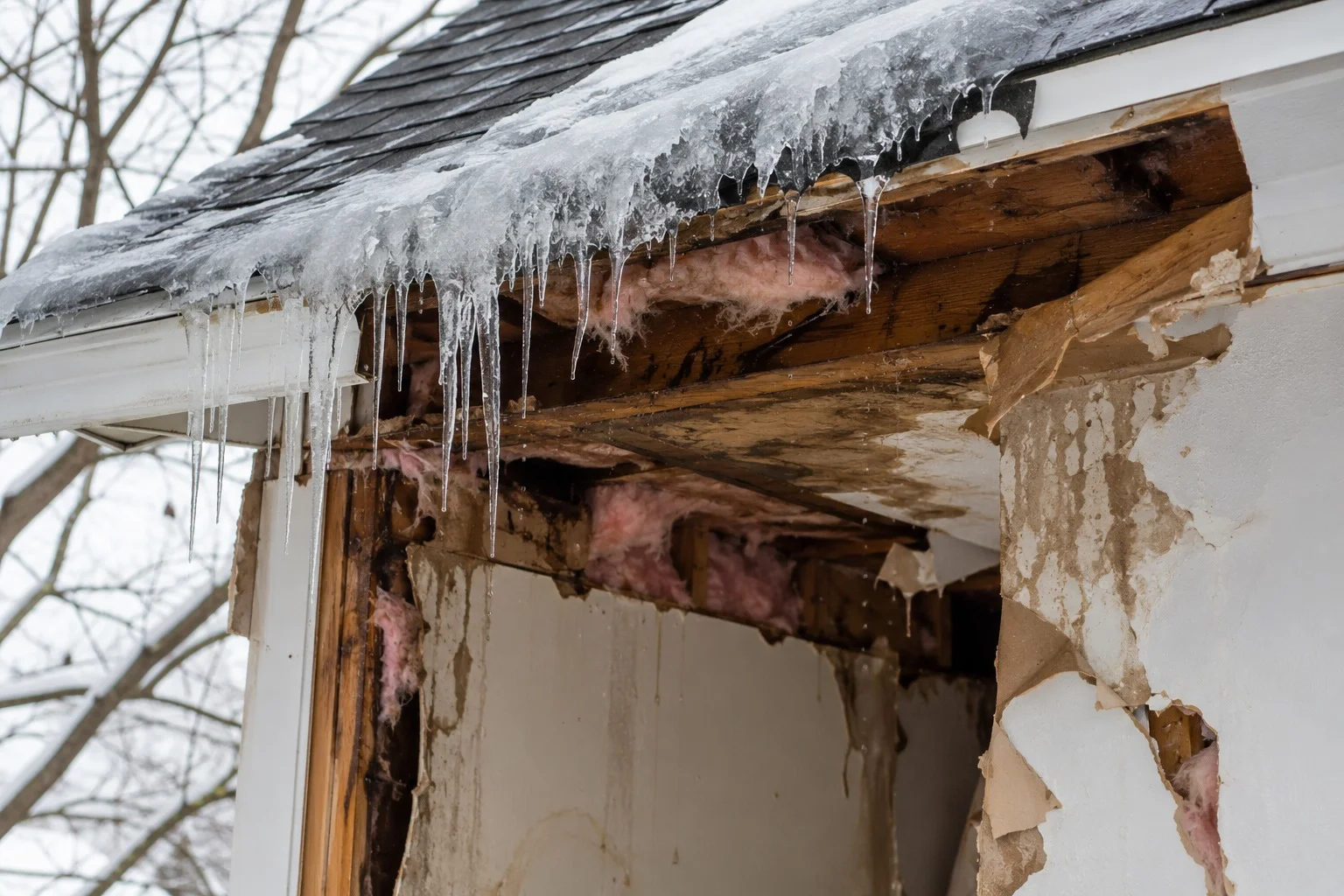
As more snow melts above and more ice builds at the eaves, a dam forms. Water pools behind this ice dam with nowhere to go. It backs up under shingles, around flashing, through nail penetrations, and into your attic.
From there, it drips onto attic insulation, soaks through ceiling drywall, runs down wall cavities, and can damage rooms well below the roofline.
Why Greenbush Homes Are Especially Vulnerable
Several factors make ice dams particularly common around here:
74 inches of annual snowfall provides the raw material for ice dam formation on every roof surface
Older homes with settled attic insulation lose heat through the roof deck more readily. Many homes built before 1980 have insulation that has compressed and thinned over decades
Complex roof lines common on Cape Cod and Colonial-style homes in the area create valleys and low-slope areas where ice dams form more easily
Freeze-thaw cycles run from November through April in Penobscot County, giving ice dams months to form, grow, and cause damage
Recessed lighting, bathroom exhaust fans, and attic access hatches in older homes create warm spots on the roof deck that accelerate uneven melting
What Ice Dam Damage Looks Like
Ice dam damage is often not obvious until it has progressed significantly:
Water stains on ceilings below the roofline, especially near exterior walls
Peeling or bubbling paint on ceilings and upper walls
Dripping water from light fixtures, smoke detectors, or ceiling fan mounts
Wet or sagging insulation in the attic
Ice forming on interior walls or window frames in the attic
Dark staining on attic sheathing (roof boards), which indicates moisture has been present long enough for mold to begin growing
Icicles hanging from the eaves are a warning sign that ice dams may be forming (though not all icicles indicate dam formation)
If you see any of these signs, the damage may already be more extensive than what is visible. Water from ice dams travels along rafters and framing before dripping, which means the entry point and the visible damage can be several feet apart.
How We Handle Ice Dam Water Damage
Damage Assessment
We inspect the affected areas with thermal imaging cameras and moisture meters to trace the water path from the roof entry point to every area it has reached. Ice dam water often travels further than homeowners expect.
We check the attic sheathing, insulation, rafters, ceiling joists, drywall, wall cavities, and any rooms below the leak. If mold has begun growing on attic sheathing (which is common when leaks go unnoticed), we document that as well.
Mold Treatment
If mold is present on attic sheathing or other surfaces, we follow IICRC S520 mold remediation protocols. For attic sheathing, this typically involves HEPA vacuuming the affected surfaces, treating with antimicrobial agents, and verifying clearance.
Sheathing with surface mold can usually be treated in place. Sheathing with deep mold penetration may need to be replaced, which becomes part of the roof repair scope.
Water Extraction and Material Removal
Standing water is extracted from affected areas. Wet ceiling drywall that has sagged or delaminated is removed. Soaked attic insulation is pulled and disposed of. If water reached wall cavities, we apply the same flood-cutting and insulation-removal approach used in other water damage restoration work.
Reconstruction
We repair ceilings, walls, insulation, and any other damaged materials. If the ice dam damage was severe enough to compromise roofing materials, we coordinate with a roofing contractor (or handle it directly depending on scope) to ensure the roof is restored before interior finishes are completed.
Structural Drying
We set up drying equipment in the affected attic space and rooms below. Attic drying can be challenging due to limited access and ventilation, but it is essential. Wet attic sheathing that is not dried will develop mold, and mold on the underside of your roof deck can spread across the entire attic.
We use commercial dehumidifiers and air movers with daily monitoring until all materials reach their dry standard.
How to Prevent Ice Dams
Fixing the damage is necessary. Preventing it from happening again is smarter.
Add attic insulation.
The goal is to keep heat in your living space and out of the attic. Current recommendations for Maine homes call for R-49 to R-60 attic insulation. Many older Greenbush homes have R-19 or less after decades of settling.
Improve attic ventilation.
Proper soffit, ridge, and gable vents allow cold outside air to flow through the attic, keeping the roof deck cold and preventing snow from melting unevenly.
Seal attic air leaks.
Gaps around plumbing stacks, electrical wiring, recessed lights, and attic hatches allow warm air to escape into the attic. Sealing these is often more effective than adding insulation alone.
Install ice and water shield.
During roof replacement, have ice and water shield membrane installed along the eaves (at least 3 feet past the exterior wall line). This does not prevent ice dams, but it prevents the water behind them from entering the structure.
Remove snow from vulnerable areas.
A roof rake can clear snow from the lower 3 to 4 feet of your roof after heavy snowfalls, reducing the material available for ice dam formation.
Read our full ice dam prevention guide for Maine homeowners
Ice dam damage in your home? Call (207) 857-7378. We trace the damage, dry the structure, and handle the repair.