Frozen and Burst Pipe Water Damage in Greenbush, ME
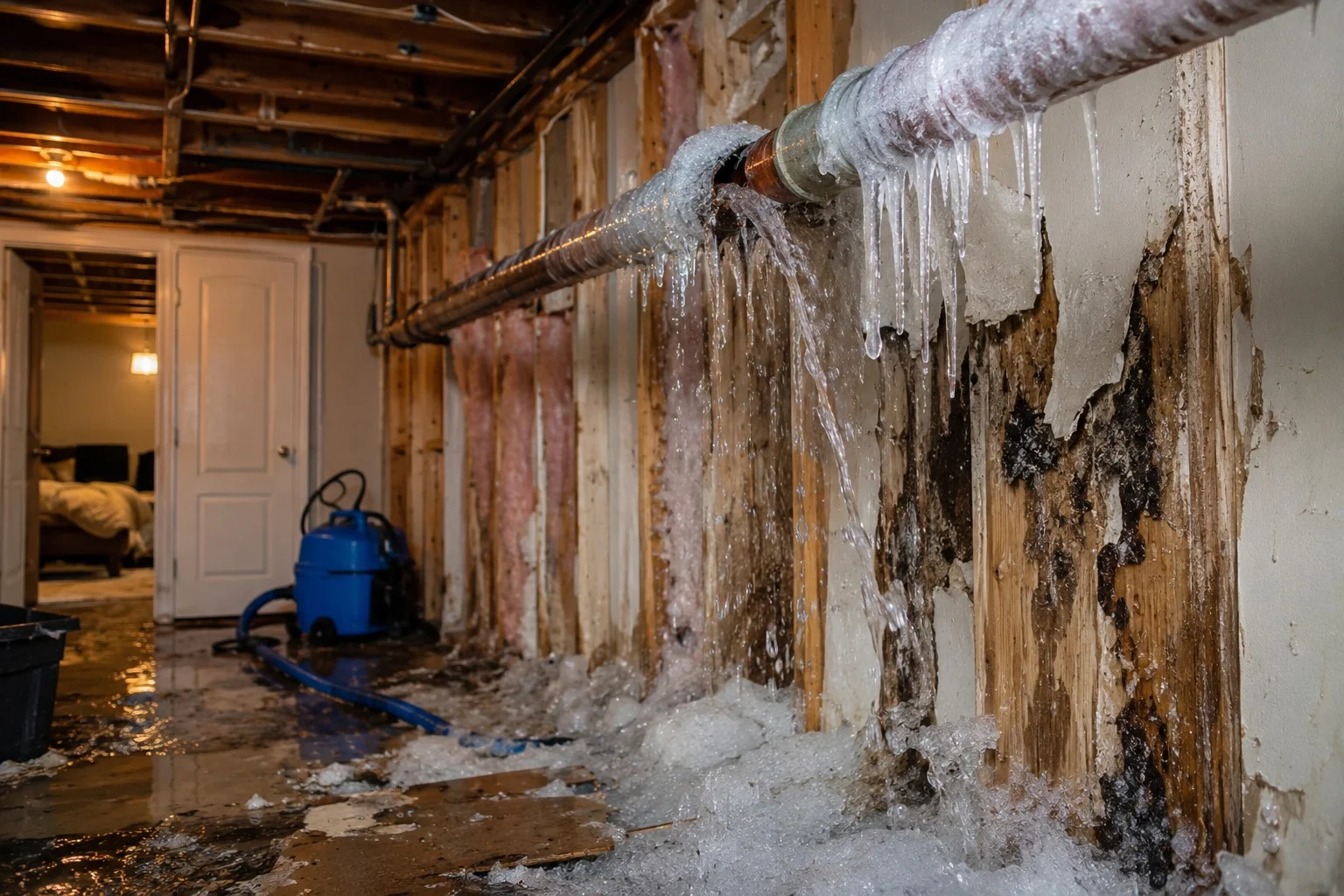
Frozen and burst pipes are the number one cause of water damage in Greenbush, Maine. When temperatures drop below 20 degrees, pipes in uninsulated exterior walls, crawl spaces, and unheated basements can freeze and rupture, flooding your home with hundreds of gallons in minutes. We provide 24/7 emergency response for burst pipe water damage across Greenbush and Penobscot County. Call (207) 857-7378 now.
Why Frozen Pipes Are So Common in Greenbush
Greenbush gets an average of 74 inches of snow each winter. Average winter lows drop to around 17 degrees, and cold snaps regularly push temps well below zero.
That alone is enough to freeze pipes. But there is more to it.
Most homes in this part of Penobscot County were built before 1980. Many of those homes have supply pipes running through exterior walls without proper insulation. Others have pipes in crawl spaces where cold air circulates freely under the house. Some older homes along Route 2 and in the Olamon area have water lines that pass through unheated additions or enclosed porches that were added decades after the original build.
These pipes were not designed for the kind of sustained cold we get here. And when a pipe freezes, the expanding ice creates pressure that eventually splits the pipe wall. When the ice thaws or you turn the heat back on, that split opens up and water floods out.
A burst half-inch supply line can release 400 to 500 gallons of water per hour. Even a small crack in a frozen pipe can produce a steady stream that saturates walls, floors, and ceilings before anyone notices.
What to Do Right Now if a Pipe Bursts
If you are standing in your home with a burst pipe flooding, do this:
Shut off the main water supply
In most Greenbush homes, the shutoff valve is near where the water line enters the house, usually in the basement or crawl space access area. Turn the valve clockwise until it stops. If you cannot find it or reach it safely, call us and we will walk you through it.
Call your plumber
To repair the broken pipe. We handle the water damage. Your plumber handles the pipe. We coordinate with plumbers regularly and can recommend one if you do not have one.
Turn off electricity to the affected area
if water is near outlets, appliances, or your electrical panel. Use your breaker box. Do not touch electrical switches or outlets while standing in water.
Move valuables
Off wet floors if you can do so safely. Photo albums, documents, electronics, and personal items are the priority.
Do not attempt to dry the area with household fans
A box fan on a wet wall does not dry the insulation inside that wall cavity. It only dries the surface, leaving trapped moisture that turns into mold.
Call us at (207) 857-7378
Tell us what is happening. We will dispatch a crew and give you specific instructions for your situation.
Take photos
Of the damage before moving anything. Your insurance company will need documentation of the original damage.
How We Handle Burst Pipe Water Damage
Emergency Water Extraction
We arrive with truck-mounted extraction equipment and immediately begin removing standing water. The faster we extract, the less water soaks into building materials.
Damage Assessment and Documentation
Using thermal imaging cameras and moisture meters, we map exactly where water has traveled. In burst pipe situations, water often travels much further than it appears. It runs through wall cavities, follows pipes and wiring channels, drips between floors, and pools in places you cannot see.
This mapping guides what needs to be dried, what needs to be removed, and what the insurance documentation needs to show.
Demolition of Wet Materials
Saturated drywall, wet insulation, and buckled flooring get removed. We use flood cutting to remove drywall at a controlled height just above the water line, preserving as much intact wall as possible.
Wet insulation inside wall cavities must come out. It does not dry effectively in place, and it holds moisture against wood framing, which accelerates rot and mold growth.
Structural Drying
We set up commercial dehumidifiers and air movers to dry all affected areas to IICRC S500 standards. For wall cavities where insulation has been removed, we may use injectidry wall drying systems that push warm, dry air directly into the cavity through small ports.
We take daily moisture readings with calibrated meters and do not pull equipment until every surface reads within its dry standard.
Antimicrobial Treatment
All affected surfaces get treated with antimicrobial agents to prevent mold growth. This is standard on every burst pipe job, not an upsell.
Reconstruction
After drying is verified, we replace everything that was removed. New insulation, new drywall, tape and finish, paint, baseboards, and flooring. Same crew, same project, no handoff to a second contractor.
How Much Does Burst Pipe Water Damage Restoration Cost?
Costs vary based on how long the pipe was running, how far the water spread, and what materials are affected.
Typical ranges for Greenbush:
Homeowners insurance in Maine typically covers burst pipe damage as a sudden and accidental event. We document everything using Xactimate, the estimating software insurance adjusters use, and communicate directly with your adjuster throughout the process. If the pipe burst because of a slow freeze and you were away, coverage still usually applies. What insurance typically does NOT cover is damage from a pipe you knew was leaking and did not repair.
How to Prevent Frozen Pipes in Your Greenbush Home
Prevention is always cheaper than restoration. Here are the practical steps:
Insulate Pipes
Insulate exposed pipes in crawl spaces, attics, and exterior walls. Foam pipe insulation is inexpensive and effective.
Seal Leaks
Seal air leaks around pipes where they pass through exterior walls. Even a small draft can freeze a pipe.
Open Cabinets
Keep cabinet doors open under sinks on exterior walls during cold snaps. This lets heated air reach the pipes.
Maintain Heat
Maintain heat at 55 degrees minimum if you leave your home during winter. Do not shut off heat to save money while traveling.
Locate Shutoff
Know where your main shutoff valve is before you need it. Find it now, make sure it turns freely, and show everyone in your household where it is.
Disconnect Hoses
Disconnect garden hoses and shut off exterior hose bibs before the first freeze.
Heat Cables
Consider pipe heating cable for particularly vulnerable runs in crawl spaces and exterior walls.
Read our full frozen pipe prevention guide for Greenbush homeowners
Have a burst pipe or concerned about frozen pipes? Call (207) 857-7378 any time. We are here 24/7.