How to Prevent Frozen Pipes in Your Greenbush, Maine Home
Frozen pipes are the number one cause of water damage in Greenbush. With 74 inches of annual snowfall and winter lows averaging 17 degrees (colder during deep cold snaps), every home in Penobscot County has pipes at risk. The good news is that most frozen pipe events are preventable with preparation that costs a fraction of what a burst pipe restoration runs. Here is what to do before winter hits.
Which Pipes Are Most at Risk
Not every pipe in your home is equally vulnerable. Focus your prevention efforts on these:
Pipes in Exterior Walls
Many Greenbush homes built before 1980 have water supply lines routed through exterior walls without insulation between the pipe and the outside sheathing. These pipes are directly exposed to outdoor temperatures through the wall. When temps drop below 20 degrees, they are the first to freeze.
Common locations: kitchen sink supply lines on an exterior wall, bathroom pipes on north-facing or west-facing walls, pipes in additions or enclosed porches that were built after the original construction.
Pipes in Crawl Spaces
Homes sitting on crawl spaces expose their plumbing to cold air circulating under the house. In an unencapsulated crawl space with no vapor barrier, air temperatures can be close to outdoor temperatures during winter.
Supply lines, drain lines, and water heater connections in crawl spaces are all vulnerable. Crawl space encapsulation addresses this by sealing and insulating the space, but short of that, pipe insulation on individual runs helps.
Pipes in Unheated Areas
Basements that are unheated, attached garages with plumbing, utility rooms without registers, and attic spaces where pipes pass through on the way to upper-floor bathrooms. Any pipe in a space that does not receive consistent heat from your heating system is at risk.
Hose Bibs and Exterior Faucets
Outdoor faucets (hose bibs) connect directly to your interior plumbing through the foundation wall. If the hose bib is not a frost-free type and the water supply to it is not shut off and drained before winter, the pipe can freeze inside the wall.
Prevention Steps That Work
1. Insulate Vulnerable Pipes
Foam pipe insulation is available at any hardware store for a few dollars per section. Install it on all exposed pipes in crawl spaces, basements, attics, and any unheated area.
For pipes in exterior walls that you can access (during a renovation or from an adjacent space), add insulation between the pipe and the exterior sheathing. The goal is to keep the pipe closer to indoor temperature than outdoor temperature.
For high-risk areas, consider pipe heating cable (also called heat tape). This electric cable wraps around the pipe and provides gentle heat during cold weather. It is thermostatically controlled and only runs when temperatures drop to a set point.
2. Seal Air Leaks Around Pipes
Where pipes pass through exterior walls, there are often gaps around the penetration. Cold air flowing through these gaps can freeze a pipe even if the pipe itself is insulated. Seal these gaps with expanding foam, caulk, or insulation material.
Check around dryer vents, electrical penetrations, and cable entries as well. Any gap that lets cold air into a wall cavity near a pipe creates risk.
3. Keep Cabinet Doors Open
During cold snaps, open the cabinet doors under kitchen and bathroom sinks that are on exterior walls. This allows heated room air to reach the pipes. It is a simple step that has prevented a lot of frozen pipe events in Greenbush homes.
4. Maintain Minimum Heat
If you leave your home for any period during winter, even a weekend trip, keep your thermostat set to at least 55 degrees. Do not turn off the heat to save money while you are away. A burst pipe repair costs $2,000 to $20,000. The heating cost for a weekend is negligible by comparison.
If you are leaving for an extended period (snowbirds heading south for the winter), consider having a trusted neighbor check on your home periodically, or install a temperature monitoring system that alerts you if indoor temperature drops.
5. Disconnect Garden Hoses
Before the first freeze, disconnect all garden hoses from outdoor faucets. Close the interior shutoff valve for each hose bib (if your home has them) and open the outdoor faucet to drain any remaining water.
A hose left connected traps water in the hose bib and the connected pipe. That trapped water freezes, expands, and can split the pipe inside your wall.
6. Know Your Shutoff Valve
If a pipe does burst, the single most important thing you can do is shut off the water supply quickly. Every minute a burst pipe runs, it floods your home further.
Find your main water shutoff valve now, before you need it. In most Greenbush homes, it is where the supply line enters the house (basement or crawl space). Make sure it turns freely. Show every member of your household where it is.
If you are on well water, the shutoff is typically near the pressure tank. If you are on municipal water, it may be at the meter or where the line enters the foundation.
7. Let Faucets Drip During Extreme Cold
During deep cold snaps (below zero), letting a thin stream of water run from faucets served by vulnerable pipes can prevent freezing. Moving water is harder to freeze than standing water. Even a slow drip helps.
This is a last-resort measure for extreme cold, not a daily habit. Focus on insulation and heat maintenance as the primary prevention.
What to Do If Your Pipes Freeze
If you turn on a faucet and get no water, or only a trickle, you may have a frozen pipe.
- Keep the faucet open. As the ice melts, you want water to be able to flow.
- Apply gentle heat. Use a hair dryer, heat lamp, or portable space heater directed at the suspected frozen section. Never use an open flame (propane torch, lighter, candle) to thaw a pipe. Fire risk is real.
- Work from the faucet backward. Start thawing at the faucet and work toward the frozen section. This allows melting water to flow out rather than building pressure.
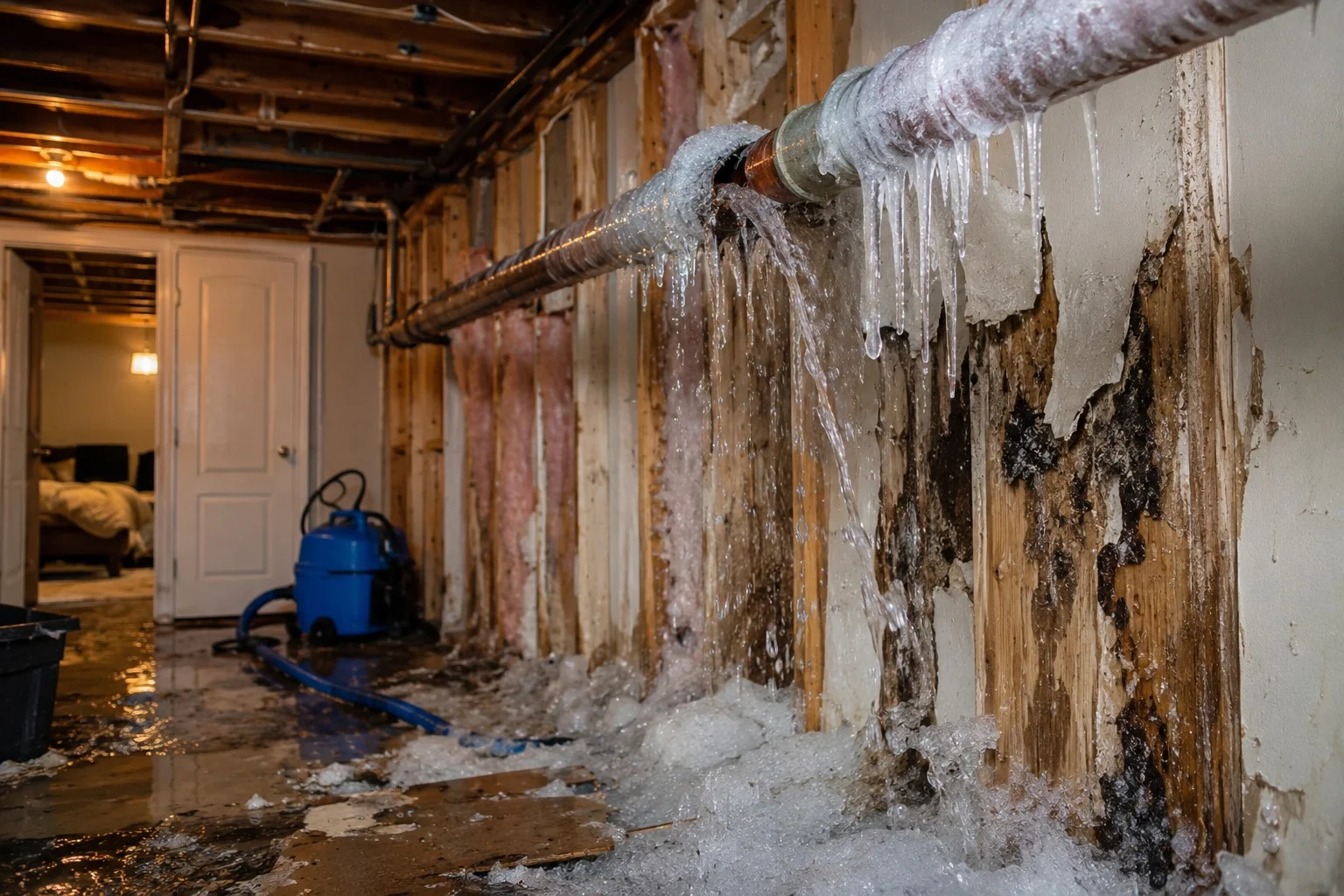
- Check for damage. As the pipe thaws, watch for leaks. A pipe may have already split from the ice pressure, and the crack is sealed by ice. When the ice melts, water starts flowing through the crack.
- If the pipe has burst, shut off the water at the main valve and call us at (207) 857-7378 and your plumber.
When Prevention Is Not Enough
Some Greenbush homes have plumbing configurations that make freeze prevention extremely difficult: pipes buried deep in exterior walls with no access, supply lines running through concrete slabs, or long runs through unheated spaces that cannot be easily insulated.
If your home has recurring freeze issues despite your prevention efforts, it may be worth considering a plumbing reroute that moves vulnerable pipes to interior walls or heated spaces. The upfront cost is significant, but it eliminates the recurring risk and potential for a major water damage event.
We cannot reroute your plumbing (that is your plumber’s job), but we handle the water damage when prevention fails. And we would rather you prevent it.
Questions about frozen pipe prevention or dealing with a burst pipe? Call (207) 857-7378 any time.
Frequently Asked Questions
At what temperature do pipes freeze?
Pipes become at risk when outdoor temperatures drop below 20 degrees Fahrenheit. Pipes in uninsulated exterior walls and crawl spaces are most vulnerable. During deep cold snaps below zero, even some interior pipes in poorly insulated areas can freeze.
How much does burst pipe water damage cost to fix?
Costs range from $2,000 for a single-room event caught quickly to $20,000+ for a pipe that ran for hours or days. Fast shutoff and fast response dramatically reduce the cost.
Should I drip my faucets all winter?
Only during extreme cold (below zero). Letting faucets drip slightly during deep freezes can prevent freezing in vulnerable pipes. For normal cold weather, proper insulation and heat maintenance are more effective and less wasteful.
My pipes froze last winter. What should I do differently this year?
Identify which pipes froze and insulate them before this winter. Seal any air gaps near those pipes. Consider heat tape for chronically vulnerable sections. Maintain minimum heat of 55 degrees whenever the house is unoccupied.