How to File a Water Damage Insurance Claim in Maine
Filing a water damage insurance claim does not have to be complicated, but doing it right from the start makes a real difference in how quickly your claim is approved and how much of your loss is covered. This guide walks you through the process step by step, based on what we see working with Greenbush and Penobscot County homeowners every week. Call (207) 857-7378 for immediate help with water damage and claims documentation.
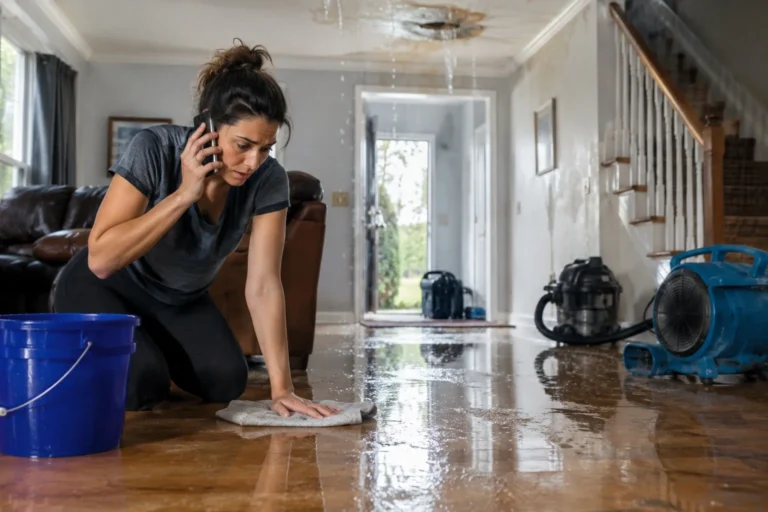
Step 1: Mitigate the Damage
Before you think about claims, stop the damage from getting worse.
Your insurance policy requires you to take “reasonable steps” to prevent further damage. This is not optional. If you fail to mitigate, your insurer can reduce your claim based on damage that could have been prevented.
Reasonable mitigation includes:
- Shutting off the water source
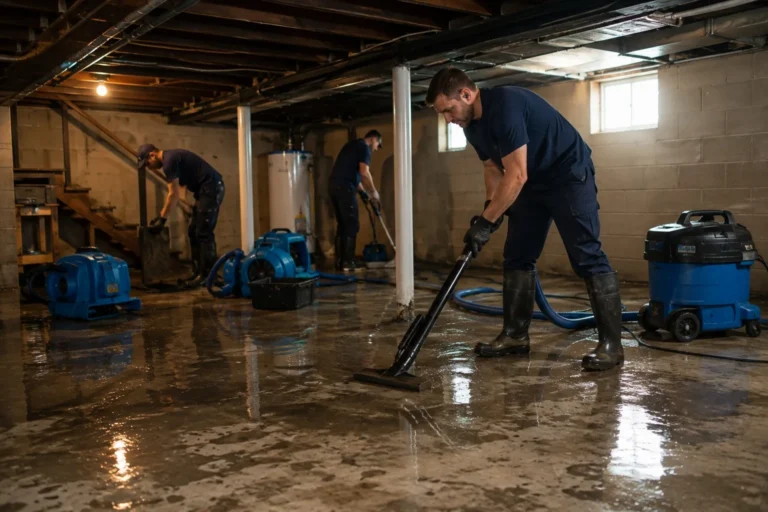
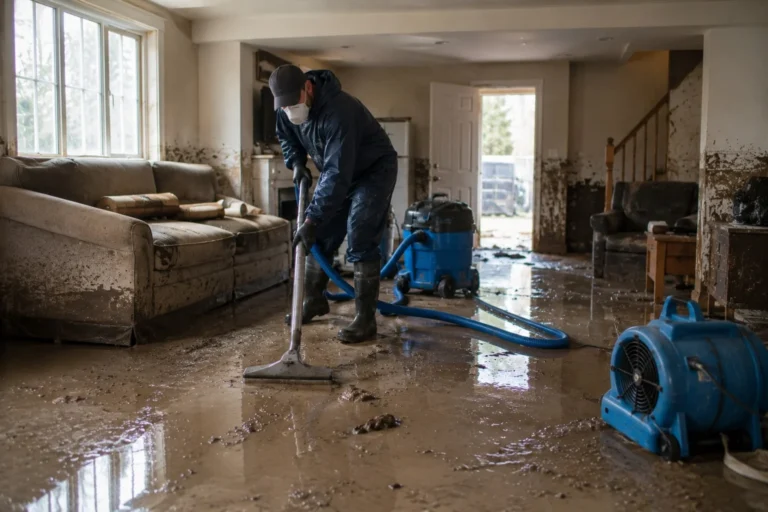
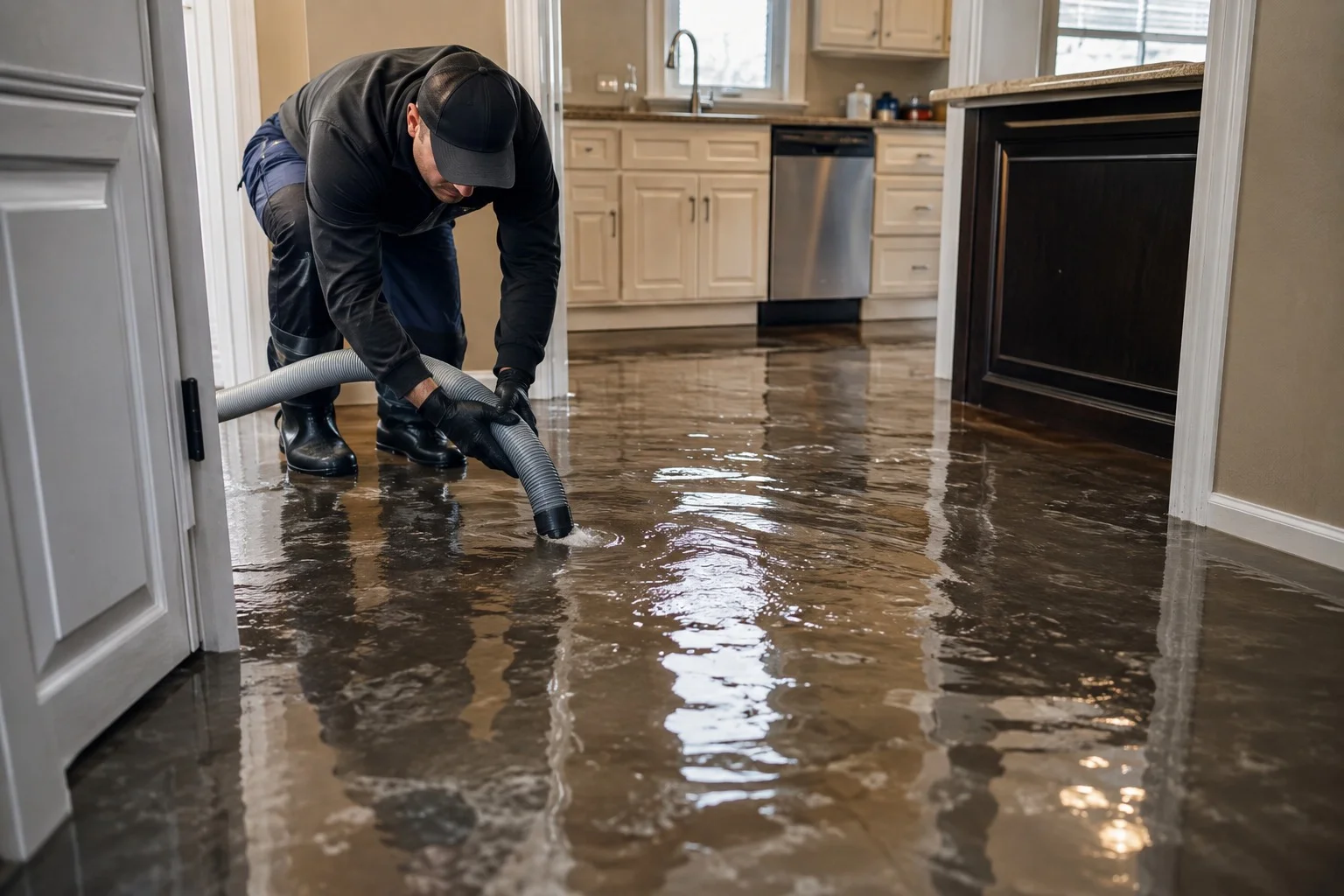
- Calling a restoration company to begin emergency extraction
- Moving valuables away from water
- Placing buckets under active leaks
- Covering broken windows or roof damage with tarps
Call us at (207) 857-7378 as your first action. We begin emergency mitigation immediately, which is exactly what your insurance company expects.
Step 2: Document Everything
Before cleanup begins, document the damage as thoroughly as you can:
- Photograph every affected area from multiple angles
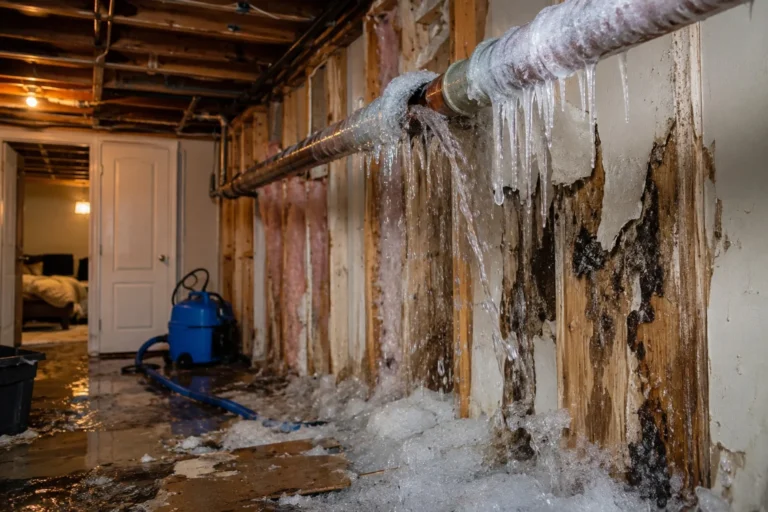
- Photograph the source of the water (the broken pipe, failed appliance, damaged roof)
- Video walkthrough of the entire affected area
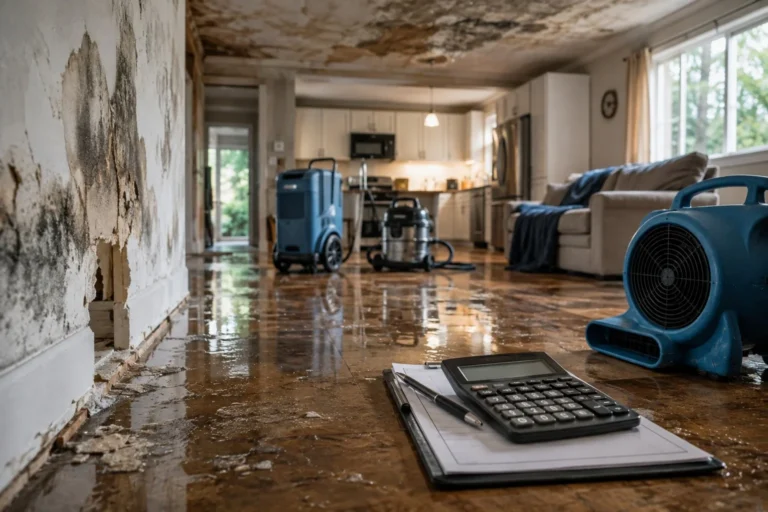
- Close-ups of damaged materials (buckled floors, water-stained walls, soaked carpet)
- Photograph damaged belongings before moving them
Use your phone with timestamps enabled. This documentation is your evidence. The more thorough it is, the smoother your claim process will be.
Once we arrive, our documentation supplements yours with professional-grade thermal imaging, calibrated moisture readings, and detailed mapping of every affected area.
Step 3: Report the Loss to Your Insurer
Call your insurance company or agent to report the loss. Do this within 24 to 48 hours of discovering the damage.
When you call, provide:
- Date and time the damage occurred or was discovered
- Cause of the water damage (burst pipe, appliance failure, storm, etc.)
- Extent of damage (which rooms, approximate area)
- What you have done to mitigate (shut off water, called restoration company)
- Your policy number
The insurer will assign a claim number and an adjuster. Save the claim number and the adjuster’s contact information.
Step 4: Do Not Discard Damaged Materials Before Documentation
This is a common mistake. Homeowners begin cleaning up and throw away damaged materials before the adjuster sees them or before they are properly documented.
Keep damaged materials until they have been photographed and documented. If materials must be removed for health and safety (sewage-contaminated items, materials with active mold growth), photograph them thoroughly before disposal.
We document all materials before removal as part of our standard process. Photos, descriptions, measurements, and moisture readings are all captured before anything leaves your home.
Step 5: Work With the Adjuster
Your insurance company will assign an adjuster to inspect the damage. This may be:
- A field adjuster who visits your property in person
- A desk adjuster who reviews documentation remotely
- An independent adjuster contracted by the insurer
We communicate directly with your adjuster throughout the project. Our documentation package includes everything they need to evaluate the claim: photos, moisture readings, thermal images, drying logs, and Xactimate estimates.
If the adjuster’s scope differs from ours, we work to resolve the difference through documentation and direct conversation. Most scope disagreements are resolved when both parties are working from the same data.
Step 6: Review the Settlement Offer
After the adjuster inspects and reviews documentation, your insurer will issue a settlement offer. Review it carefully:
- Does it cover all affected areas documented in the assessment?
- Does it include both mitigation (extraction, drying) and reconstruction (replacement of removed materials)?
- Does it include contents (personal property) if applicable?
- Is the total consistent with the Xactimate estimate we prepared?
If the offer seems low or excludes documented damage, you have the right to negotiate. We can provide supplemental documentation to support disputed items.
Step 7: Complete the Restoration
Once the claim is approved (or while approval is pending for the mitigation portion), restoration proceeds through our standard process: extraction, demolition, drying, antimicrobial treatment, clearance, and reconstruction.
Insurance payments may arrive in installments: one for mitigation, one for reconstruction. Some policies include a recoverable depreciation holdback that is released after work is completed.
Common Mistakes to Avoid
- Waiting too long to report. Report within 24 to 48 hours. Delayed reporting gives insurers grounds to question the claim.
- Not mitigating promptly. Your policy requires reasonable mitigation. Failure to act can reduce your payout.
- Throwing away damaged materials before they are documented.
- Signing anything from a contractor before reading it. Understand the scope and authorization before signing.
- Accepting the first offer without review. Settlement offers can be negotiated if documentation supports a higher amount.
- Not keeping records. Save all correspondence, receipts, photos, and documentation related to the loss.
Your Rights as a Maine Policyholder
- You choose your own restoration company
- You have the right to a written explanation of any denial
- You can hire a public adjuster to negotiate on your behalf
- You can file a complaint with the Maine Bureau of Insurance if your claim is handled improperly
- Your insurer must act in good faith and within reasonable timelines
Need help with your water damage insurance claim? Call (207) 857-7378. We handle the documentation so you can focus on your home.
Frequently Asked Questions
How long does an insurance claim take to process?
Most water damage claims are settled within 2 to 4 weeks for the mitigation portion. Reconstruction payment may take an additional 2 to 4 weeks after work is completed. Complex claims or disputed scopes can take longer.
Can my claim be denied?
Yes. Common denial reasons include: the damage is from an excluded cause (flooding, maintenance neglect), the damage was not reported promptly, or the policyholder failed to mitigate. Thorough documentation from the start is the best protection against unfair denial.
Should I get my own estimate or use my insurer’s?
We prepare a detailed Xactimate estimate as part of our service. Having your own estimate provides a basis for comparison with the adjuster’s assessment. This is especially valuable if there is a scope disagreement.
What is depreciation holdback?
Some policies pay the depreciated value of damaged materials initially, then release the remaining amount (the recoverable depreciation) after repairs are completed. This means your final payment may come in two parts.