Storm Damage Restoration in Greenbush, ME
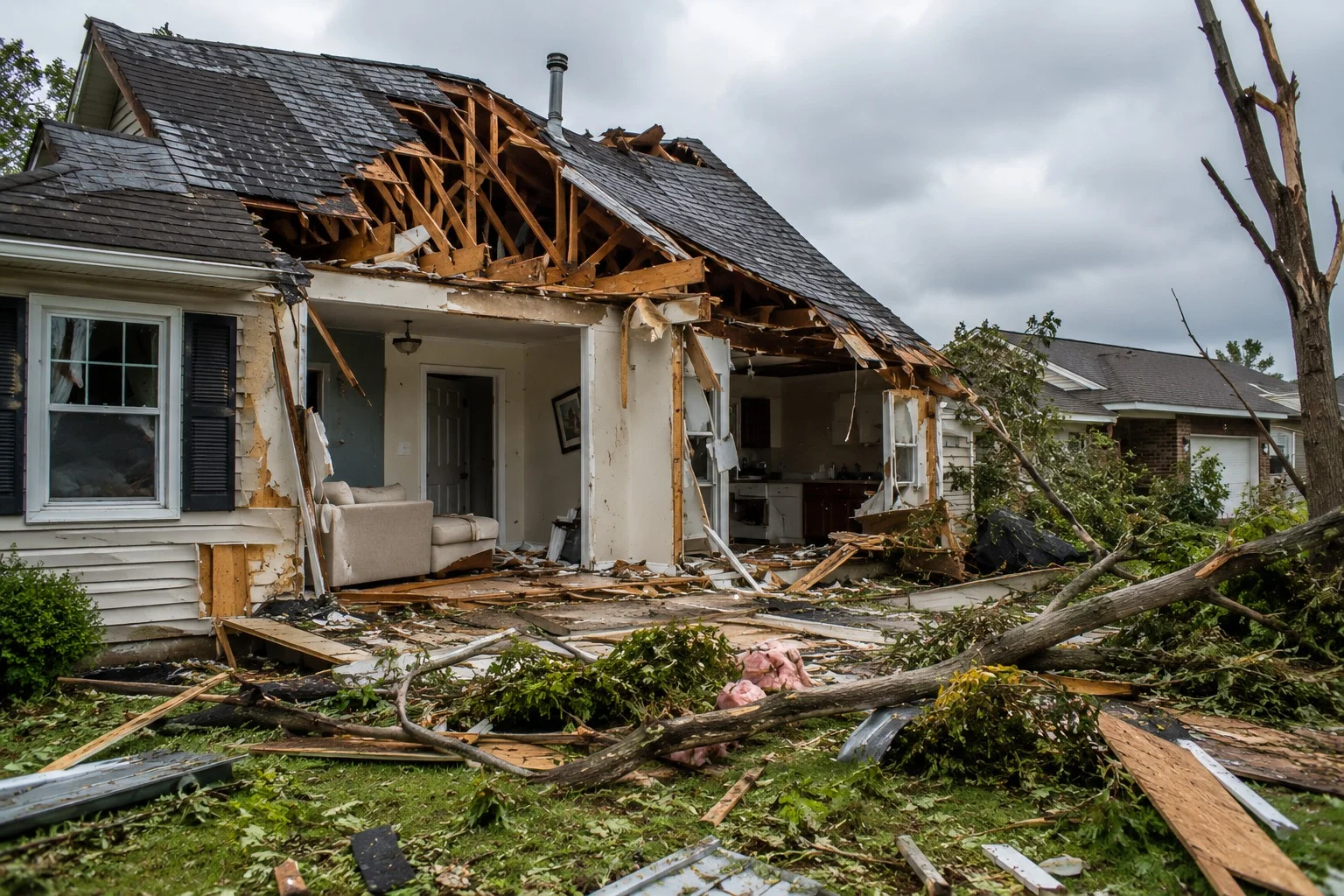
When a storm hits Greenbush and Penobscot County, it often brings multiple types of damage at once: wind-driven rain through a compromised roof, fallen trees on structures, power outages that kill sump pumps, and flooding from overwhelmed drainage. Water Damage Greenbush, ME provides 24/7 emergency storm damage restoration. We stabilize your property, extract water, dry the structure, and handle the full rebuild. Call (207) 857-7378. Storm damage to your home? Call (207) 857-7378. We answer 24/7 and prioritize emergency stabilization.
Storm Threats in Greenbush and Penobscot County
Central Maine’s weather produces several storm types that damage homes throughout the year.
Nor’easters and Winter Storms
Nor’easters bring heavy snow, high winds, and sometimes rain-on-snow events that are particularly destructive. A single nor’easter can dump 12 to 18 inches of snow while sustaining 40+ mph winds. The weight of wet snow on roofs causes structural stress and accelerates ice dam formation.
Power outages during these storms are common in rural areas like Greenbush, where overhead power lines run through forested corridors. When power goes out, sump pumps stop, heating systems shut down (increasing pipe freeze risk), and homeowners lose their first line of defense against basement flooding.
Summer Thunderstorms
Penobscot County averages 20 to 25 thunderstorm days per year. Severe thunderstorms bring damaging winds, heavy rain, lightning, and occasional hail. A single intense storm can dump 1 to 2 inches of rain in under an hour, overwhelming gutters, downspouts, and foundation drainage.
Wind damage during thunderstorms includes blown-off shingles, damaged siding, broken windows, and fallen trees or branches on roofs. Any breach in the building envelope allows rain to enter and begin damaging interior materials immediately.
Ice Storms
Ice storms coat everything in a layer of freezing rain. Tree limbs snap under the weight and fall on homes. Power lines go down. The ice itself infiltrates small gaps in roofing, siding, and flashing. An ice storm can cause damage that is not apparent until the ice melts and water begins dripping into attic spaces and walls.
Spring Flood Events
Heavy spring rain combined with snowmelt creates flood conditions across the Penobscot River corridor. Properties near the river and its tributaries face direct flood risk from water that is classified as Category 3 contaminated.
What Storm Damage Restoration Includes
Emergency Tarping and Board-Up
If your roof is damaged or windows are broken, the first priority is stopping water from continuing to enter. We install temporary tarps over roof damage and board up broken windows and openings to protect your home from further exposure.
This emergency stabilization happens before any interior restoration work begins. It is covered under the emergency mitigation portion of your insurance claim.
Water Extraction
Once the building is stabilized, we extract all standing water from affected areas. Storm water that enters through a damaged roof or broken window may affect multiple rooms and multiple floors as it travels downward through the structure.
Damage Assessment and Documentation
We use thermal imaging cameras and moisture meters to map every area the water reached. Storm damage often follows unexpected paths. Water entering through a roof breach can travel along rafters, drip into wall cavities, and end up in rooms far from the original entry point.
Complete documentation is critical for storm damage claims. We photograph all damage, record moisture readings, and prepare detailed Xactimate estimates for your insurance company.
Structural Drying
We deploy commercial drying equipment throughout all affected areas. Dehumidifiers, air movers, and daily moisture monitoring continue until every surface reaches verified dry standards.
For attic spaces affected by roof leaks, we ensure insulation is either dried or replaced and that sheathing moisture levels return to normal before any roof repair is completed.
Mold Prevention
Storm damage that goes unaddressed for even a few days creates prime conditions for mold growth. We treat all affected surfaces with antimicrobial agents and monitor for mold throughout the drying process.
Reconstruction
We handle every repair needed to restore your home: roof repairs, window replacement, drywall, ceilings, flooring, paint, and trim. Full reconstruction under one project.
Does Insurance Cover Storm Damage?
Most homeowners insurance policies in Maine cover storm damage including:
- Wind damage to roofs, siding, and windows
- Rain entering through storm-created openings
- Fallen tree damage (trees on your property that fall on your structure)
- Lightning damage
- Hail damage
What is typically NOT covered:
- Flooding from surface water, rising rivers, or groundwater (requires NFIP flood insurance)
- Damage from poor maintenance (a roof that was already failing before the storm)
- Landscaping and exterior damage beyond the structure itself (varies by policy)
We prepare complete documentation for storm damage claims and communicate directly with your adjuster. Storm seasons are busy for adjusters, and thorough documentation helps your claim move faster.
Storm damage to your home? Call (207) 857-7378. We stabilize, dry, and rebuild.