Emergency Water Extraction in Greenbush, ME
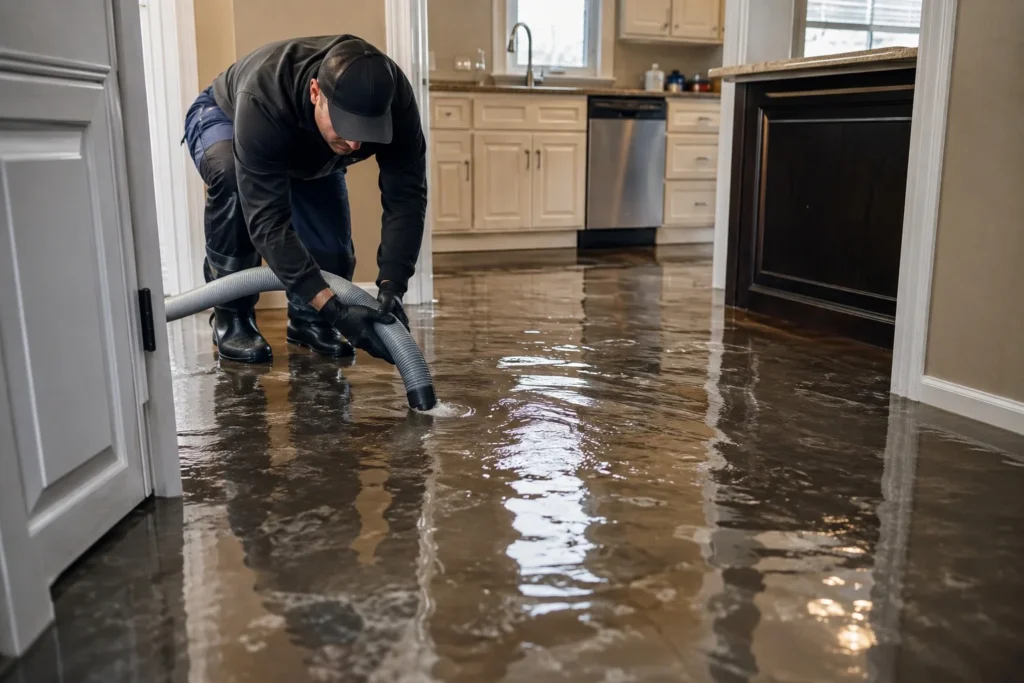
When water is standing in your home, the only priority is getting it out fast. Water Damage Greenbush, ME provides 24/7 emergency water extraction for homes across Greenbush, Olamon, Cardville, and all of Penobscot County. We arrive with truck-mounted extraction equipment and begin removing water immediately. Call (207) 857-7378 right now.
Why Fast Water Extraction Matters
Every minute water sits in your home, it soaks deeper.
In the first hour, water saturates carpet, padding, and the surface of hardwood flooring. Within 2 to 4 hours, it wicks up drywall, soaks into subfloors, and reaches wall insulation. After 24 hours, wood framing begins to swell and warp. After 48 hours, mold can begin growing on any wet organic material.
For Greenbush homes built before 1980 with older plywood subfloors, fieldstone foundations, and plaster walls, water moves even faster through porous materials.
The math is simple. Faster extraction means less damage, lower cost, and a much lower chance of mold down the road.
What Causes Water Emergencies in Greenbush?
The most common water extraction calls we handle around here include:
No matter the source, the first step is always the same: get the water out.
Burst pipes during winter freezes.
When temperatures drop below 17 degrees, pipes in uninsulated exterior walls and crawl spaces are at serious risk. A single burst supply line can release 400 to 500 gallons per hour.
Sump pump failure during spring thaw.
When 74 inches of accumulated snowmelt hits the ground all at once, sump pumps run nonstop. If the pump fails or loses power, basements flood fast.
Appliance failures.
Water heater ruptures, washing machine hose bursts, and dishwasher leaks can dump 40 to 80 gallons onto your floors before you even notice.
Roof leaks and ice dam damage.
Trapped meltwater behind ice dams backs up under shingles and drips into attic spaces, ceilings, and walls.
Penobscot River flooding and storm events.
River overflow and heavy rain events push water into basements and crawl spaces through foundation cracks, window wells, and floor drains.
Sewage backups.
Aging sewer lines and tree root intrusion cause Category 3 contaminated water to enter your home through floor drains and toilets.
Our Water Extraction Process
Rapid Assessment
We arrive with thermal imaging cameras and moisture meters. Before we start pumping, we need to know exactly where water has traveled. What looks like a wet kitchen floor might actually extend under cabinets, behind walls, and into an adjacent room.
Thermal cameras let us see temperature differences that indicate hidden moisture behind walls and under floors. This mapping guides every decision that follows.
Crawl Space and Basement Extraction
A lot of homes in Greenbush sit on crawl spaces rather than full basements. Standing water under your home is harder to access but just as dangerous. We use submersible pumps and portable extraction equipment to clear crawl spaces, even in tight quarters where a person can barely fit.
For basements with significant water depth, our truck-mounted units handle the heavy extraction while portable pumps manage the remaining water in corners, utility rooms, and low spots.
Standing Water Removal
We use truck-mounted extraction units for high-volume water removal. These are not shop vacs. A commercial extractor can remove thousands of gallons per hour from flooded basements, standing water on floors, and saturated carpets.
For carpeted areas, we use weighted extraction tools that press deep into the carpet and pad to pull out water that surface extraction misses. For hard surfaces, we use floor wands and squeegee attachments that clear water efficiently without damaging the flooring underneath.
Transition to Drying
Once extraction is complete, we set up commercial dehumidifiers and air movers to begin the structural drying process. Water extraction and drying are two different phases. Extraction removes the bulk water. Drying removes the moisture that has absorbed into building materials.
We do not leave after extraction and call it done. That is when the real work starts.
Sub-Surface Extraction
After standing water is gone, significant moisture remains trapped in carpet padding, subfloors, and the lower portions of drywall. We use specialty extractors designed to pull water from these materials.
In many Greenbush homes with hardwood floors over plywood subfloors, water travels between the boards and pools underneath. Surface drying will not reach this. We use floor mat drying systems that create suction through the flutes and butt joints of hardwood, pulling trapped moisture out without removing the flooring.
What Equipment Do We Use for Water Extraction?
The equipment matters. Here is what we bring to every extraction job:
Truck-mounted extraction units:
High-volume water removal systems that can extract thousands of gallons per hour. Far more powerful than any portable unit.
Portable submersible pumps:
For basements, crawl spaces, and areas where truck-mounted hoses cannot reach.
Weighted carpet extractors:
Press into carpet and padding to pull water from deep within the fibers and backing.
Hard surface wands:
Floor-level extractors for hardwood, tile, laminate, and concrete surfaces.
Floor mat drying systems:
Lay flat on hardwood and create suction through the wood joints to extract trapped sub-surface water.
Thermal imaging cameras:
Identify hidden moisture pockets behind walls and under floors before and after extraction.
Calibrated moisture meters:
Measure moisture content in specific materials to verify extraction completeness.
This is professional-grade equipment. A wet/dry vacuum from the hardware store removes surface water. It does not reach the moisture that causes real damage.
How Much Does Water Extraction Cost?
Water extraction costs depend on how much water is present, the size of the affected area, and the type of water involved.
General ranges for Greenbush and Penobscot County:
These ranges cover extraction only. Structural drying, demolition of damaged materials, and mold remediation are separate costs that depend on how extensive the damage is. We provide a written scope and estimate before we proceed beyond emergency extraction. Most homeowners insurance policies in Maine cover sudden water damage from burst pipes and appliance failures. We handle the insurance documentation directly.
When Can I Handle Water Cleanup Myself?
If you spilled a bucket of water on your kitchen floor and mopped it up within an hour, you are fine.
If the water reached any of these, call us:
- Behind drywall or into wall cavities
- Under hardwood, laminate, or tile flooring
- Into carpet padding (not just the carpet surface)
- Into insulation in walls or crawl spaces
- Any amount of water in a crawl space or basement
- Any water from a sewage backup, toilet overflow, or outdoor flooding
- Any situation where water sat for more than a few hours
The difference between a cleanup and a restoration job is whether moisture reached places you cannot see or dry with household tools. A moisture meter and thermal camera answer that question. We bring both on every call. Call (207) 857-7378 any time. We will tell you honestly whether your situation needs professional extraction or if you can handle it yourself.