What to Do in the First Hour After Water Damage
The first 60 minutes after water damage begins in your home are the most important. What you do and what you avoid doing in that window directly affects how much damage your home sustains, how much the restoration costs, and whether mold becomes a problem weeks later. This guide walks you through exactly what to do, step by step, based on the situations we see every week across Greenbush and Penobscot County.
If water is actively flooding your home right now, call (207) 857-7378 first. We will walk you through these steps on the phone while we dispatch a crew.
Step 1: Stay Safe (Minutes 0-5)
Before you touch anything, assess your safety.
Electrical Hazards
Water and electricity are a dangerous combination. If standing water is near electrical outlets, appliances, or your electrical panel, do not step into it.
If you can safely reach your breaker box without walking through water, turn off the breakers to the affected area. If you cannot reach the breaker box safely, leave the area and call us. We will advise you on the phone.
Do not touch any electrical switches, outlets, or appliances while standing in water or on wet flooring. Even a small amount of water on the floor near an outlet creates a risk.
Structural Safety
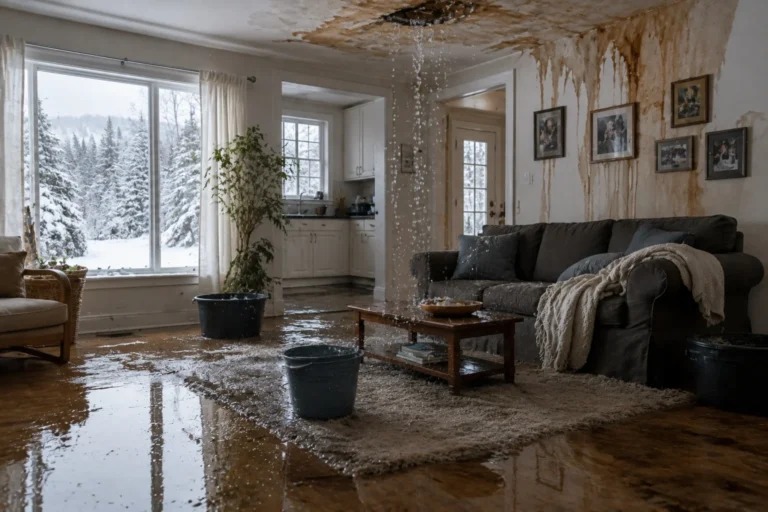
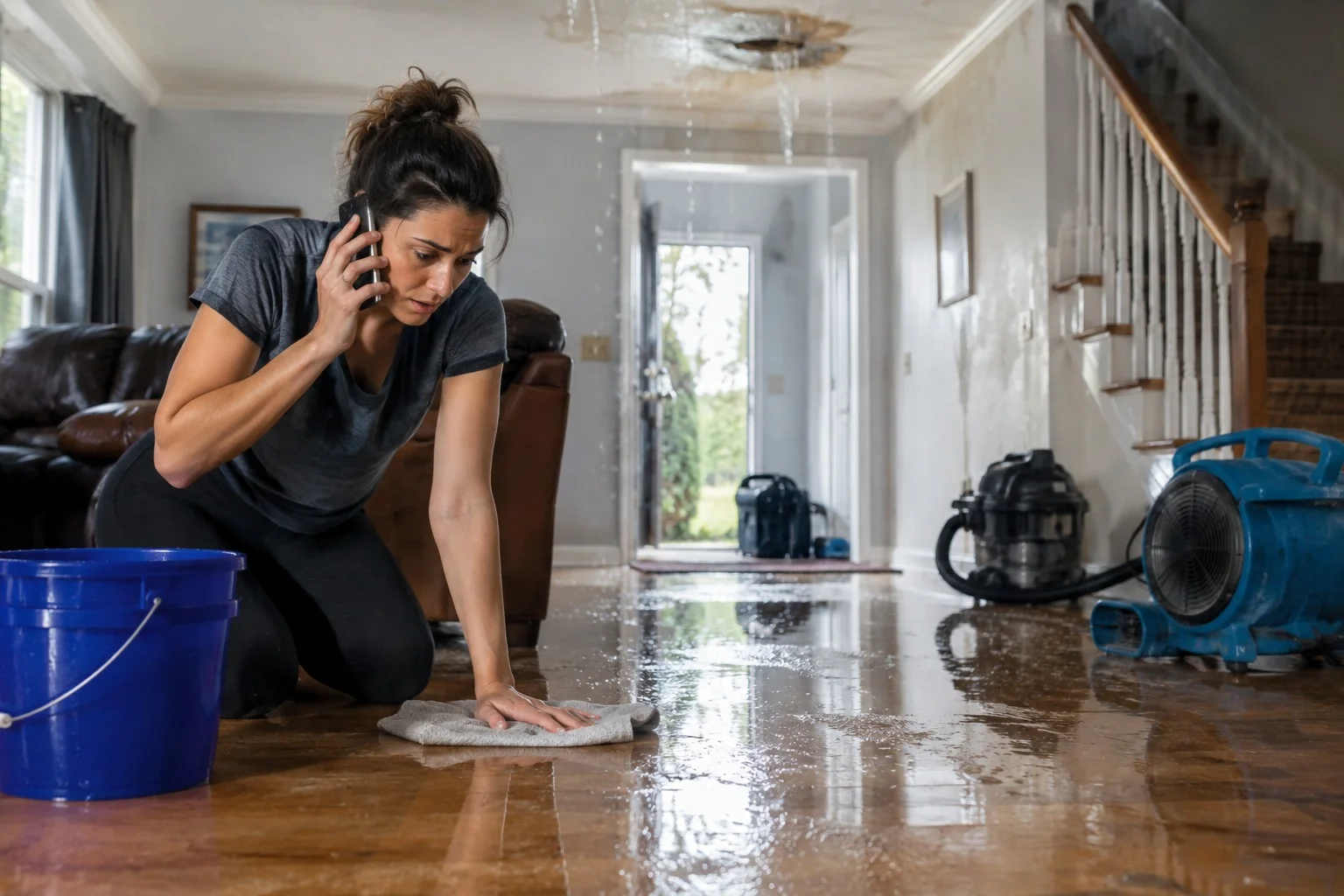
If water has been flowing for an extended period, ceiling drywall may be saturated and heavy. A water-soaked ceiling can collapse without warning. If you see bulging, sagging, or discolored sections of ceiling with water dripping through, stay out of the area directly below.
If you hear creaking or cracking from the ceiling or walls, leave the room immediately.
Contaminated Water
If the water is coming from a sewage backup, a toilet overflow, or outdoor flooding, do not contact the water with bare skin. This is Category 3 contaminated water that carries bacteria and viruses. Stay out of the affected area until professionals with proper protective equipment arrive.
Step 2: Stop the Water Source (Minutes 5-10)
If water is still flowing, the single most important thing you can do is stop it.
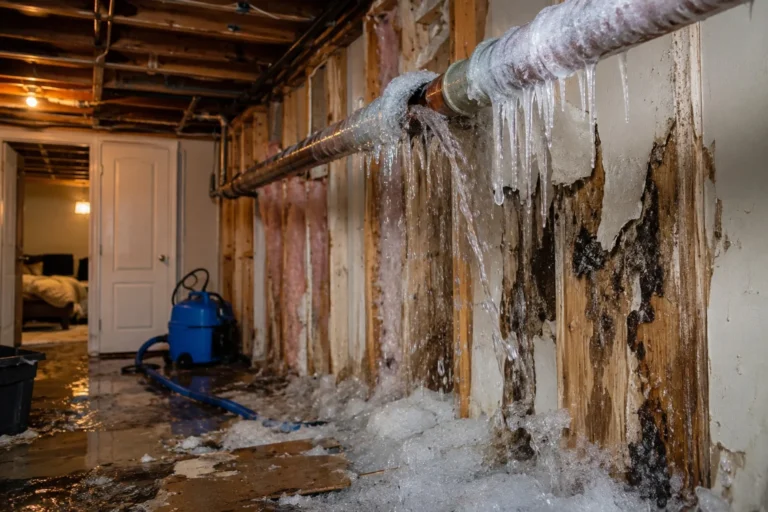
For a Burst Pipe or Plumbing Leak
Find and close your main water shutoff valve. In most Greenbush homes, this valve is located where the water supply line enters the house, which is typically:
- In the basement near the front foundation wall
- In a crawl space access area
- Near the water meter (if you have municipal water)
- Near the pressure tank (if you have a well)
Turn the valve clockwise until it stops. This shuts off all water to the house.
If you cannot find the valve or it will not turn (older gate valves can seize from lack of use), call us at (207) 857-7378 and we will talk you through locating and operating it.
For an Appliance Failure
If a water heater, washing machine, or dishwasher is leaking, locate the supply valve on the wall behind the appliance and turn it off. If you cannot reach it, use the main shutoff valve.
For a Roof Leak or Storm Damage
You cannot stop rain. Place buckets or containers under active drips to prevent water from spreading. If you have tarps, cover furniture and valuables in the affected area. Do not climb onto a wet or damaged roof.
For Basement Groundwater or Sewer Backup
You cannot shut off groundwater or municipal sewer flow. If your sump pump has failed, check whether it has power and whether the float switch is free. If the pump is powered and still not running, it may have burned out. Do not attempt to repair electrical equipment while standing in water.
Step 3: Call for Help (Minutes 10-15)
Call Your Restoration Company
Call (207) 857-7378. Tell us:
- What happened (burst pipe, leak, flood, storm damage, sewage)
- Whether water is still flowing
- How much water is present (standing water depth, number of rooms)
- Your address
We will dispatch a crew and give you specific instructions for your situation. For Greenbush addresses, we typically arrive within 60 minutes.
Call Your Insurance Company
After you have called us, contact your insurance company or agent to report the loss. Most policies require prompt notification.
When you call your insurer, tell them:
- When the damage occurred (date and approximate time)
- What caused it (burst pipe, appliance, storm, etc.)
- What rooms are affected
- That you have contacted a restoration company
You do not need a detailed assessment at this point. Just report the event. We will handle the detailed documentation once we arrive.
Call Your Plumber (If Applicable)
If the water source is a broken pipe, a failed valve, or a plumbing issue, you need a plumber to make the repair. We handle the water damage. Your plumber handles the pipe. We coordinate with plumbers regularly and can recommend one if you do not have a relationship with a local plumber.
Step 4: Protect Your Belongings (Minutes 15-30)
While you wait for the crew to arrive, focus on protecting items that are most vulnerable to water damage and hardest to replace.
Priority Items to Move
- Photo albums and printed photographs. Water destroys printed photos quickly. Get them off wet surfaces and onto dry counters or tables.
- Important documents. Birth certificates, deeds, tax records, passports. Anything in a file cabinet or drawer that is near water.
- Electronics. Laptops, tablets, hard drives. If they have not contacted water yet, move them to a dry area.
- Heirlooms and irreplaceable items. Anything with sentimental value that cannot be replaced.
- Medications. Move them to a dry location where you can access them.
What NOT to Do
- Do not move heavy furniture on your own if it creates a risk of injury. Water-soaked furniture is much heavier than normal.
- Do not remove wet carpet unless it is creating a tripping hazard. The restoration crew needs to assess it in place.
- Do not turn on household fans to try to dry the area. Fans on the surface do not dry moisture inside wall cavities, and in contaminated water situations, they can spread contaminants.
- Do not use a regular vacuum to suck up water. Household vacuums are not designed for water and create an electrocution risk.
- Do not use space heaters in wet areas. This creates a fire hazard and does not dry building materials effectively.
Step 5: Document Everything (Minutes 30-45)
Your insurance claim depends on documentation. Take photos and video of the damage before anything is moved, cleaned, or dried.
What to Photograph
- The source of the water (the broken pipe, failed appliance, roof leak entry point)
- Every room affected, from multiple angles
- Close-ups of damaged materials (buckled floors, water-stained walls, saturated carpet)
- Any belongings that are damaged or at risk
- Water lines on walls showing how high the water reached
- Your water meter reading (some adjusters use this to estimate total water volume)
Use your phone. Timestamp the photos. This is the evidence that supports your claim.
Keep a Written Log
Start a simple log with dates, times, and what happened:
- When you discovered the damage
- When you shut off the water
- When you called your restoration company
- When you called your insurance company
- Any actions you took to prevent further damage
Insurance companies appreciate documented evidence that you took prompt, reasonable steps to minimize the loss.
Step 6: Prepare for the Crew’s Arrival (Minutes 45-60)
Clear Access
If the damaged area is in a basement, make sure the crew can get equipment down the stairs. If it is in a crawl space, clear the area around the access point. Move vehicles so the extraction truck can park close to the house.
Secure Pets
Restoration equipment is loud and the process involves people moving through your home. Secure pets in an unaffected area or with a neighbor.
Prepare to Provide Access
If you need to leave while the crew works (for work, errands, or temporary relocation), arrange for someone to be available to let them in, or provide a key or access code. Drying equipment needs to run continuously, and daily monitoring requires entry.
What Happens After the First Hour
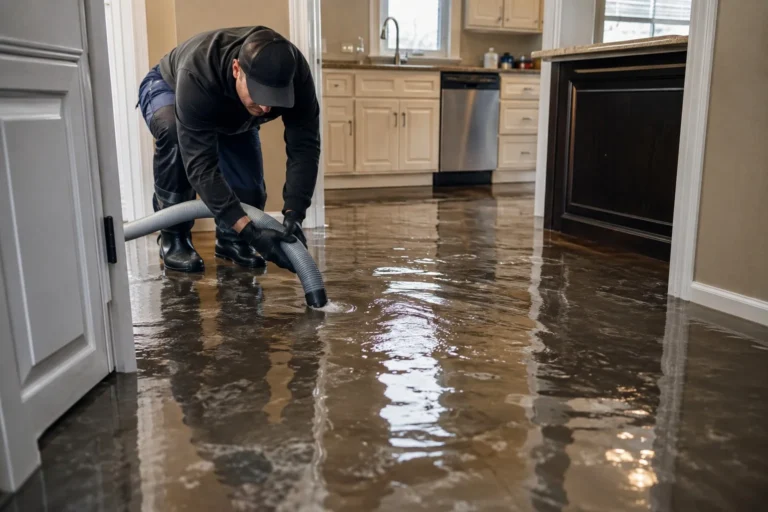
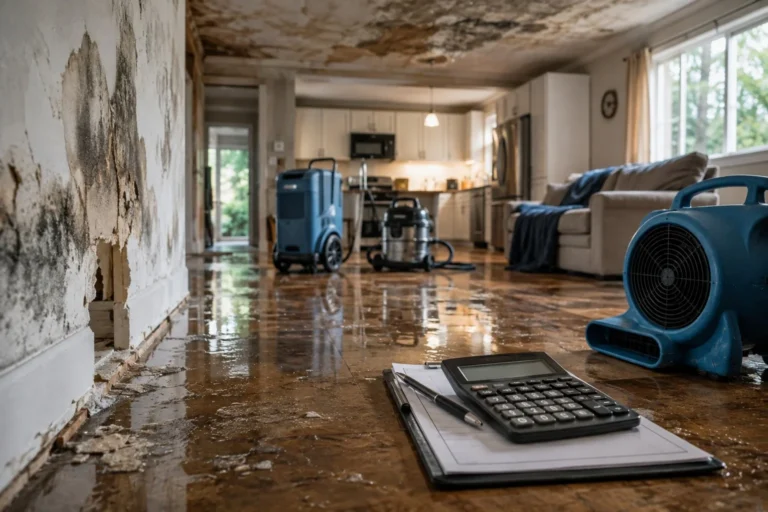
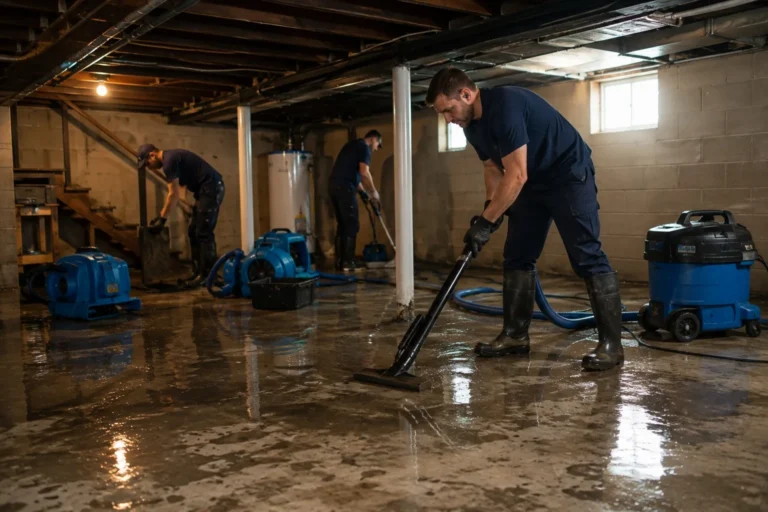
Once the crew arrives, the professional restoration process begins: full assessment with thermal cameras and moisture meters, water extraction, demolition of damaged materials, structural drying, antimicrobial treatment, and eventual reconstruction.
The first hour is your window. Everything you do in that time reduces the total damage, lowers your cost, and gives the restoration crew a better starting point.
Learn more about our full restoration process
Water damage in your home? Call (207) 857-7378 right now. We answer 24/7 and will walk you through every step.
Frequently Asked Questions
Should I call my insurance company or a restoration company first?
Call the restoration company first. We can begin mitigating damage immediately, which is what your insurance company wants you to do. Then call your insurer to report the loss. We handle the detailed documentation for your claim.
Can I wait until morning to deal with water damage?
No. Every hour water sits in your home, it soaks deeper into building materials. Mold can begin growing within 24 to 48 hours. Waiting overnight can double the extent of damage and cost. Call us any time, including the middle of the night.
What if I am not sure how serious the damage is?
Call us and describe what you see. We will help you assess whether it needs immediate professional response or if it can wait for a scheduled visit. There is no charge for the phone call, and we will give you an honest answer.
What if I am away from home when the damage happens?
If a neighbor or alarm system alerts you to a water problem while you are away, call us immediately. We can meet a neighbor or property manager at the home to begin emergency stabilization. The sooner extraction starts, even without you present, the less damage your home sustains.