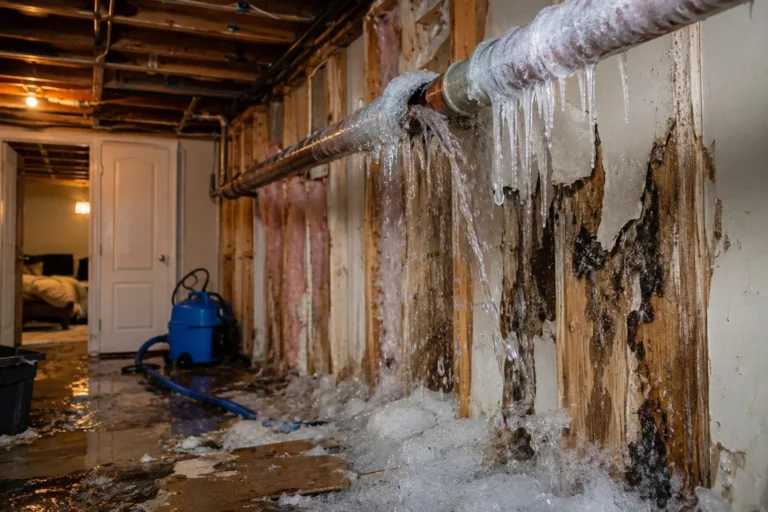

Penobscot River Flood Risk for Greenbush Homes
Greenbush sits on the eastern bank of the Penobscot River, Maine’s largest river system. Living along this river means living with flood risk. Understanding that risk, knowing what insurance does and does not cover, and preparing your home can make the difference between a manageable event and a financial disaster. Here is what Greenbush homeowners need to know.
The Penobscot River Through Greenbush
The Penobscot River forms the western boundary of Greenbush, flowing south toward Old Town, Milford, and eventually Bangor, where the National Weather Service sets the flood stage at 11.6 feet.
The Penobscot River Basin contains approximately 119 dams. While 12 of these serve flood control purposes, many lower-river dams are run-of-river structures with little or no capacity to hold back runoff during peak flow. When spring thaw sends accumulated snowmelt from across the basin into the river system, flow rates surge.
Two significant dams between Old Town and Bradley (the Veazie Dam and Great Works Dam) were removed in 2012 and 2013 as part of the Penobscot River Restoration Project. While this was positive for river ecology and fish passage, it changed ice and water dynamics through the lower river corridor.
Ice Jam Flooding
Ice jams are the most acute flood threat along the Penobscot corridor in the Greenbush area.
Ice jams form when river ice breaks up during spring warming but encounters a constriction, a bend, or a section of intact ice downstream. The broken ice piles up, creating a dam that backs water upstream. When an ice jam releases, it sends a surge of water and ice downstream that can overwhelm riverbanks and flood adjacent properties.
Recent Ice Jam Events
March 2026: Ice jam flooding on the Piscataquis River (a major Penobscot tributary joining near Howland, just upstream from Greenbush) displaced residents and flooded homes. The Maine Emergency Management Agency (MEMA) warned that standard homeowner and business insurance policies do not cover flood damage from these events. The U.S. Coast Guard deployed icebreaking tugs and a 140-foot icebreaker on the Penobscot River.
This was not a rare event. Ice jam flooding occurs periodically throughout the Penobscot Basin.
Spring Runoff Flooding
Even without ice jams, spring runoff can push river levels to flood stage. The Penobscot Basin drains a massive area of central and northern Maine. When warm temperatures and rain accelerate snowmelt across this basin simultaneously, the river handles an enormous volume of water.
Properties in low-lying areas along the Penobscot, near tributary confluences, and in areas with poor drainage face the greatest risk during high water events.
What Flood Insurance Covers (and Why You Need It)
Standard homeowners insurance does NOT cover river flooding. This is the most important thing Greenbush homeowners near the Penobscot need to understand.
Whether water enters your home from river overflow, ice jam backup, or groundwater that rises because of river-driven water table changes, standard homeowners insurance classifies it as flooding and denies the claim.
You need a separate flood insurance policy through the National Flood Insurance Program (NFIP). NFIP policies cover structural damage and contents damage from flooding, including river overflow.
Key points about NFIP flood insurance:
- Available through most insurance agents
- Required if your property is in a FEMA-designated Special Flood Hazard Area (SFHA) and you have a federally backed mortgage
- 30-day waiting period before coverage takes effect (you cannot buy it after a flood warning)
- Separate coverage limits for building and contents
- Average annual premium varies by flood zone, elevation, and building characteristics
Even if your property is not in a designated flood zone, you can still purchase NFIP coverage. Given the Penobscot River’s flood history and the proximity of many Greenbush properties to the river, it is worth the investment.
How to Prepare Your Home
Check Your FEMA Flood Zone
Visit FEMA’s Flood Map Service Center and search your address. This shows whether your property is in a Special Flood Hazard Area and which flood zone it falls in.
Purchase Flood Insurance
If you do not have it, get it now. Remember the 30-day waiting period. Do not wait until a flood is forecast.
Elevate Valuable Items
In basements and ground-floor rooms near the river, store important items and valuables above potential flood levels. Use shelving, pallets, or upper-floor storage.
Maintain Your Sump Pump
A working sump pump with battery backup is essential for any home near the river. Test it before spring thaw begins.
Create a Flood Emergency Kit
Keep essential documents, medications, phone chargers, and a change of clothes in a grab bag that can leave with you if evacuation is needed.
Know Your Evacuation Route
If flooding threatens your home, know which roads provide safe passage to higher ground. Route 2 through Greenbush runs well above the typical flood plain, but lower roads near the river may become impassable.
What to Do During a Flood Event
If floodwater is threatening or entering your home:
- Evacuate if water is rising and threatening your safety. Property can be restored. Lives cannot.
- Do not walk or drive through floodwater. Six inches of moving water can knock you down. Two feet of water can float a car.
- Turn off electricity at the main breaker if you can do so safely before water reaches electrical systems.
- Document the damage with photos and video from a safe location.
- Call us at (207) 857-7378 as soon as it is safe to begin flood damage cleanup. We handle Category 3 contaminated floodwater with proper protocols and equipment.
- Contact your flood insurance provider to report the loss.
Concerned about flood risk near the Penobscot? Need flood damage restoration? Call (207) 857-7378.
Frequently Asked Questions
How often does the Penobscot River flood near Greenbush?
Significant flooding events have occurred in 1936, 1987, 1996, 2005, and 2026. Minor high-water events happen more frequently during spring thaw. The risk is real and recurring.
Will my standard homeowners insurance cover river flooding?
No. Standard policies exclude flooding from external water sources including rivers. You need separate NFIP flood insurance.
Is my property in a flood zone?
Check your address at FEMA’s Flood Map Service Center (msc.fema.gov). Flood zone designations determine your risk level and whether flood insurance is required for your mortgage.
Can I buy flood insurance after a flood warning is issued?
You can purchase a policy at any time, but NFIP policies have a 30-day waiting period before coverage begins. A policy bought after a warning will not cover the imminent event.